
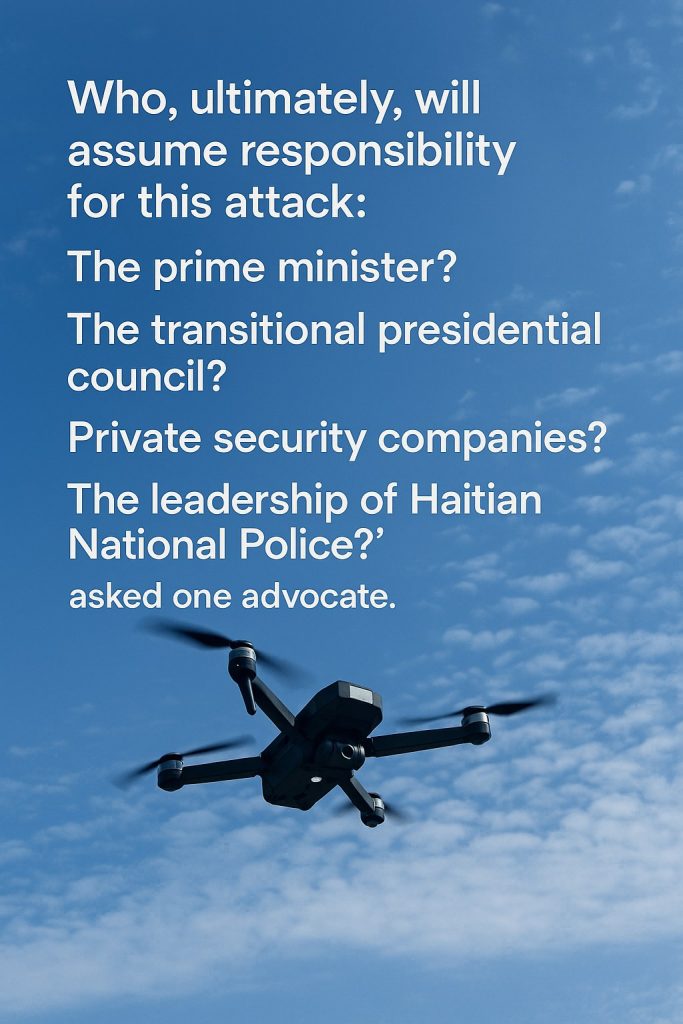
In the wake of a recent violent attack in Haiti, questions regarding accountability loom large over the nation’s leadership. “Who, ultimately, will assume responsibility for this attack: The prime minister? The transitional presidential council? Private security companies? The leadership of the Haitian National Police?” asked a concerned advocate in the midst of widespread unrest. This urgent inquiry sheds light on the complexities surrounding governance and security in a country grappling with political instability and rampant violence.
The attack, which occurred last week, has ignited fierce debates on social media and among civil society groups. Advocates are demanding answers and transparency as they seek clarity on who should bear responsibility for the spiraling violence that has plagued Haiti in recent months. With the nation dealing with issues like gang control and weak law enforcement, accountability is not just a matter of public relations but a pressing need for reconstruction and community trust.
Political commentators have argued that Prime Minister Ariel Henry must step forward to take ownership of security policies, especially in light of his role in a transitional government that was established after the assassination of former President Jovenel Moïse in July 2021. The prime minister, however, has often deflected blame, stating that the security situation is too complex for any one individual or body to shoulder.
The transitional presidential council, which was designed to facilitate a return to democratic governance, is also facing scrutiny. Critics have pointed out that the council has made little progress on establishing security measures or fostering stability. Many are wondering if its members, alongside the prime minister, should be held accountable for failing to curb the ongoing violence.
Furthermore, the involvement of private security companies in Haiti raises additional concerns. These entities, which often act with little oversight, have been criticized for exacerbating violence and complicating the political landscape. Experts suggest that their role should not be overlooked, and that an investigation into their practices is necessary to understand their impact on Haiti’s security situation.
Equally important is the Haitian National Police’s response to the crisis. Despite their mandate to protect citizens and maintain order, the police force has been criticized for its inability to effectively combat gangs and restore safety. As violence escalates, questions about the police leadership’s effectiveness and accountability become increasingly pertinent.
As the situation in Haiti remains critical, it is clear that accountability must be addressed. Calls for comprehensive investigations into the incident and the broader security policies have garnered support from human rights organizations and the Haitian populace alike.
Activist groups are advocating for greater transparency and reform within the government, police force, and private security firms, emphasizing that collective responsibility is essential not only for justice but also for future peace and stability. Without a determined effort to hold the relevant actors accountable, many fear Haiti will continue to descend into chaos.
In a country where trust in governmental institutions has waned, the push for accountability has become a rallying point for many Haitians. The outcome of this latest incident could potentially influence the path towards restoring democracy and establishing a more secure environment for the nation’s citizens.
Where to Learn More
- Haiti violence: Calls for accountability grow following latest attacks – BBC News
- Haiti’s Security Crisis: What to Expect Next – Al Jazeera
- Haiti’s Political Unrest Fuels Violence Among Security Forces – Reuters
- The Rise of Gangs in Haiti: What You Need to Know – The New York Times