
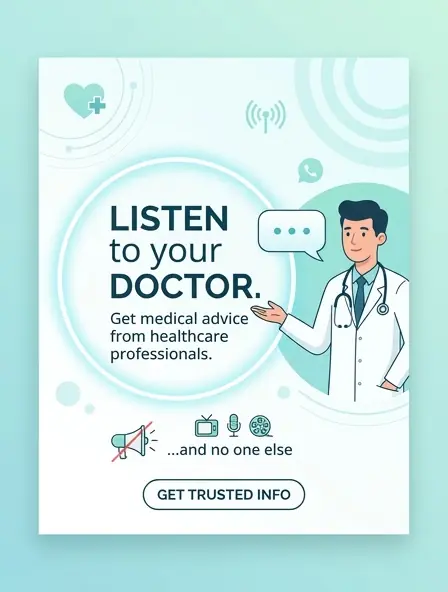
In an era where social media often shapes public opinion, a simple yet powerful message is resonating across digital platforms: when it comes to vaccines, hear what your doctor tells you, and no one else. This advice underscores a fundamental principle of medical ethics — relying on trusted healthcare professionals for guidance amid the overwhelming tide of misinformation and politicized narratives surrounding vaccines today.
The COVID-19 pandemic dramatically highlighted the critical importance of vaccination, but it also exposed societal divisions and the spread of false information that can hinder public health initiatives. As vaccine debates continue to heat up, health experts emphasize that individual decisions should be rooted in science and personalized medical advice. “Your doctor knows your health history and can provide guidance tailored to your needs,” says Dr. Susan Miller, an infectious disease specialist. “Trusting medical professionals over social media posts or unverified sources is essential for making informed health choices.”
This message is not just relevant for COVID-19 vaccines but applies broadly to immunizations for diseases like influenza, measles, and HPV. Historically, vaccine hesitancy has been fueled by misinformation campaigns, leading to outbreaks of preventable diseases. Dr. Miller warns that relying on peer-reviewed research, guidance from your healthcare provider, and established health organizations yields the best outcomes.
Another aspect fueling the mantra of trusting your doctor is the complexity of vaccine science. Vaccines involve rigorous testing, safety assessments, and ongoing monitoring — processes that can be difficult to fully understand without medical expertise. “Understanding the science behind vaccines is vital, and trained healthcare professionals are best equipped to interpret this information for their patients,” notes Dr. Alan Gomez, a public health researcher.
Social media, while a valuable tool for health advocacy and education, also serves as a breeding ground for misinformation. Users are encouraged to be cautious about sources and to prioritize advice from qualified health providers. The Centers for Disease Control and Prevention (CDC) emphasizes this, urging individuals to consult their doctors regarding vaccine questions and concerns.
Ultimately, the most reliable way to navigate the complex landscape of vaccine information is to foster open communication with your healthcare provider. Patients are encouraged to ask questions, express fears, and seek personalized advice rather than relying on unverified digital snippets or sensationalist headlines.
As the saying goes, “Trust your doctor, not your social media feed,” — a reminder that in matters of health, expert guidance remains paramount. Making informed, science-backed decisions about vaccines not only protects individual health but also reinforces the collective immunity crucial to public safety.
Where to Learn More
- Vaccinations and How They Work – Centers for Disease Control and Prevention (CDC)
- World Health Organization: Vaccines Explained – WHO
- NIH Research on Vaccine Science – National Institutes of Health
- Vaccine Misinformation and How to Spot It – Healthline