
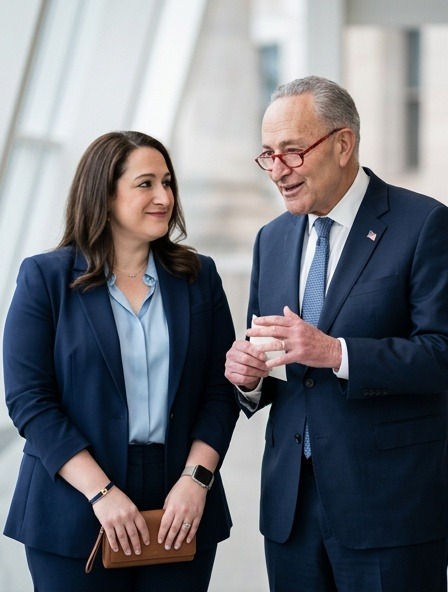
Recent revelations about Senate Majority Leader Chuck Schumer’s hiring practices have reignited ongoing debates about the pervasive influence of corporate power within American politics. The decision to bring in individuals linked to major corporations has prompted critics to argue that the lines between political leadership and corporate interests remain blurred—highlighting an unsettling truth: powerful families and political figures across both parties are deeply intertwined with the corporate behemoths shaping U.S. policy and economy.
Schumer’s latest hire, viewed by many as a sign of longstanding cozy relationships between elite political figures and corporate giants, underscores a pattern that remains largely under the radar for the general public. Critics point out that such connections often translate into a legislative landscape skewed to favor big business at the expense of ordinary Americans, fueling disparities and undermining democratic accountability.
For years, the narrative that politicians are influenced by corporate interests has gained traction through investigative reports and transparency advocates. What makes the recent hiring particularly troubling is that it exemplifies how insider networks remain solidified across party lines. While some argue these connections are necessary for effective governance, others see them as compromising the integrity of policy decisions, enabling corporations to wield outsized influence.
This dynamic is not confined to one side of the aisle. Politicians from both parties have historically received substantial campaign contributions from large corporations, families, and industry lobbyists. What’s more, several political families have direct or indirect ties to major industries—service, finance, technology, and more—that they then influence through legislative action or regulation.
The concern is compounded by the fact that as the public becomes more organized against corporate overreach—through protests, grassroots campaigns, and social media activism—the response from entrenched powers appears increasingly fortified. The hiring of politically connected individuals hints at the ongoing effort to maintain influence and control, even amid rising calls for reform and transparency.
Ultimately, Schumer’s hiring serves as a stark reminder that the forces of corporate and political power are deeply intertwined—an uncomfortable reality for Americans seeking a government truly responsive to their needs rather than the interests of the wealthy few. As the debate intensifies, it underscores the importance of ongoing vigilance, transparency, and efforts to disentangle policy from corporate agendas to restore confidence in democratic institutions.