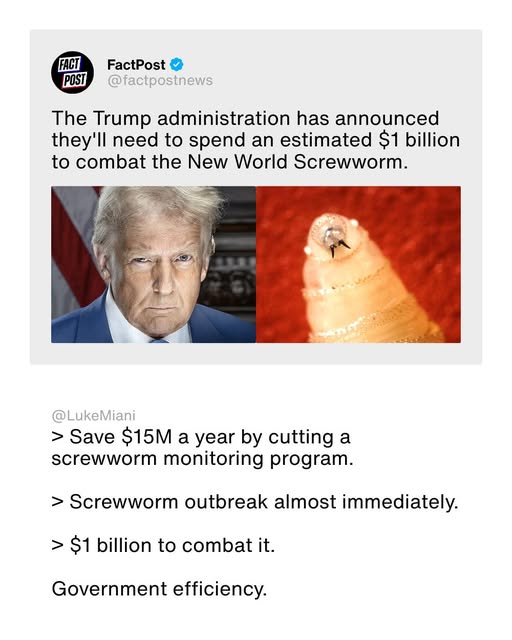
The Trump administration has announced a substantial funding initiative to tackle a pressing agricultural threat: the resurgence of the New World Screwworm (Cochliomyia hominivorax). The government estimates that approximately $1 billion will be necessary to contain and eradicate this invasive parasite, which poses a significant risk to livestock, wildlife, and even human health.
The New World Screwworm, a parasitic fly native to Central and South America, was considered eradicated from the United States after decades of successful control programs. However, recent detections in southern Texas and northern Mexico have raised alarms among agricultural and environmental authorities. Experts warn that if left unchecked, the screwworm could cause extensive economic damage, affecting cattle ranching, wildlife populations, and tourism-dependent communities.
“This is a very serious situation,” said Dr. Linda Carter, an entomologist specializing in pest control at the USDA. “The screwworm larvae feed on living tissue, causing severe injuries to animals and humans alike. An unchecked outbreak could lead to thousands of infected animals, significant losses for farmers, and ecological consequences.”
The government’s plan involves deploying a multi-pronged approach, including widespread sterilization programs, trapping, and the use of innovative genetic technologies that can suppress fly populations. The $1 billion budget will help fund these efforts across affected regions, aiming to halt the spread before it becomes a full-blown disaster.
The eradication strategy also emphasizes public awareness campaigns, urging livestock owners and residents to report unusual insect activity or infected animals. Researchers are also exploring the use of genetically modified sterile flies and other cutting-edge biotechnologies designed to rapidly reduce populations of the screwworm in the wild.
This emergency response underscores how global trade and climate change have complicated traditional pest control measures. The screwworm’s return demonstrates the importance of vigilant monitoring and rapid response systems that can adapt to emerging threats. If successful, the U.S. could avoid the costly and environmentally damaging measures required to manage outbreaks in the past.
Environmental advocates and industry groups alike have welcomed the federal funding, emphasizing that proactive measures are crucial for protecting the country’s agricultural heritage and biodiversity. The next few months will be critical in determining whether these efforts can contain the parasite and restore American livestock and ecosystems to health.