
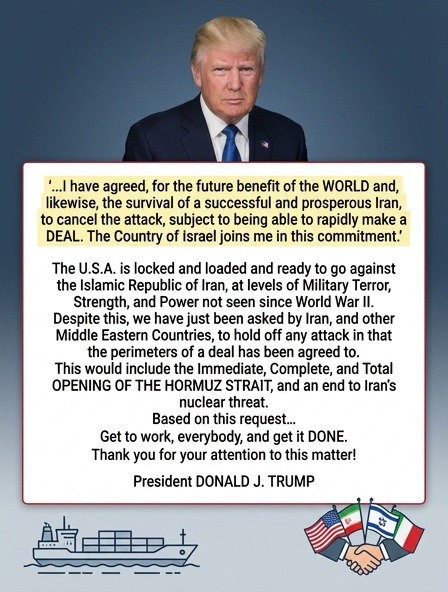
In a surprising turn of events, President Donald Trump has announced that the United States will cease plans for a military strike against Iran as diplomatic negotiations between Washington and Tehran continue to make progress. The development signals a potential shift toward de-escalation in a tense regional standoff that has captivated international attention.
On late Wednesday evening, President Trump posted a message on social media stating, “The United States will suspend the planned military action against Iran while we work toward a diplomatic solution. Our focus remains on peace and stability in the Middle East.” This move follows days of intense speculation about the possibility of a U.S. strike, which many analysts feared could ignite a broader conflict in the region.
Officials in Washington and Tehran have reportedly been engaged in quiet negotiations over the recent escalation of tensions, including Iran’s recent advances in nuclear technology and regional destabilization efforts. Sources close to the administration indicate that America’s diplomatic efforts have gained momentum, and President Trump has decided to pause military options as talks progress.
President Trump’s decision comes amid mounting international concern over the potential for conflict. Critics have argued that the threat of military action increases instability, fueling fears of a wider regional conflagration involving not only Iran but allied nations and U.S. forces across the Middle East.
Meanwhile, Iran’s government has expressed cautious optimism about the renewed dialogues, with officials stating that they are committed to peaceful negotiations. Some experts interpret the U.S. decision as a tactical move designed to leverage diplomacy and diplomatic incentives, including sanctions relief and economic agreements.
International reactions have been mixed but largely positive. The European Union and several Middle Eastern allies have welcomed the news, urging both sides to continue open channels of communication. However, some lawmakers and foreign policy analysts warn that a full agreement remains uncertain, and tensions could resurface if negotiations stall.
The pause in military action underscores the complex balancing act facing U.S. leadership as it seeks to navigate regional security concerns without escalating conflicts. It also highlights the ongoing importance of diplomatic engagement in resolving long-standing issues involving Iran’s nuclear program and regional influence.
Looking ahead, experts will be closely watching both Tehran and Washington for signs of progress or setbacks in the coming days. The international community remains hopeful that this break in aggressive rhetoric could pave the way for a lasting diplomatic resolution, potentially averting a broader military conflict and stabilizing a fragile geopolitical landscape.
Where to Learn More
- U.S. Halts Strike Plans Against Iran as Diplomacy Takes Center Stage – The New York Times
- US and Iran Engage in High-Stakes Diplomacy Amid Tensions – BBC News
- Breaking: U.S. Suspends Military Action Against Iran as Talks Continue – Reuters
- Diplomatic Progress or Just a Pause? Analyzing the U.S.-Iran Negotiations – The Wall Street Journal