
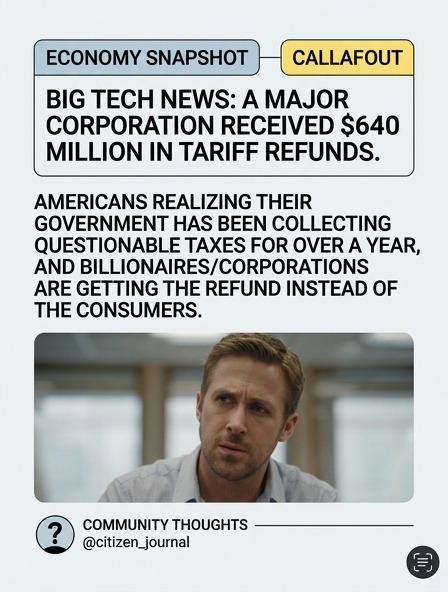
In a startling development highlighted by social media and industry insiders, Amazon has reportedly received approximately $640 million in tariff refunds from the U.S. government. The announcement, shared through a viral tweet from @Kalshi, claims that this substantial refund exposes what some critics are calling decades of illegal taxation by federal authorities.
The tweet, which has rapidly circulated across platforms, states: “JUST IN: Amazon got $640 million in tariff refunds. Americans are realizing their government has been illegally taxing them for over…”. While the message leaves some details ambiguous, it has ignited a broader conversation about the nature of tariffs, taxes, and government accountability.
Tariffs are taxes levied by the government on imported goods, often intended to protect domestic industries or generate revenue. However, critics argue that the complex and opaque nature of tariffs can sometimes lead to unintended consequences, including over-taxation or illegal collection practices. In Amazon’s case, the refund suggests that certain tariffs previously paid may have been assessed improperly or exceeded legal limits, prompting the company to seek reimbursements from Customs and Border Protection (CBP) or related agencies.
Legal experts and economic analysts are now dissecting the implications of such a large refund. Some posit that this signals systemic issues within the U.S. tariff enforcement system, potentially opening the door for other corporations and individuals to recover funds believed to have been unlawfully collected. Others warn that the situation underscores ongoing debates about the transparency and fairness of tariffs, which often disproportionately impact consumers and businesses alike.
The social media post’s provocative language—”Americans realizing their government has been illegally taxing them for over…”—resonates with wider anti-tax sentiments circulating among certain groups. These narratives argue that the government’s taxation and tariff policies may veer into illegality or overreach, fueling calls for reform and increased oversight.
While the details of Amazon’s refund process are still emerging, this revelation comes amidst a broader climate of scrutiny over U.S. trade policies, especially in light of recent economic tensions worldwide. Critics on both sides debate whether tariffs are an effective tool for economic strategy or if they simply serve as hidden taxes burdening consumers and businesses.
The story also raises questions about how many other corporations or Americans might be eligible for similar refunds, should they initiate legal proceedings or administrative claims. Legal advocates suggest that taxpayers and businesses should closely examine their own tariffs and tax structures, seeking professional advice if they suspect overpayment or illegality.
As the conversation continues to unfold, one thing is clear: transparency and accountability in government taxation are critical issues that could reshape future economic policies. The potential for large refunds like Amazon’s could serve as a catalyst for reform, ensuring the public understands exactly how their money is collected and spent.