
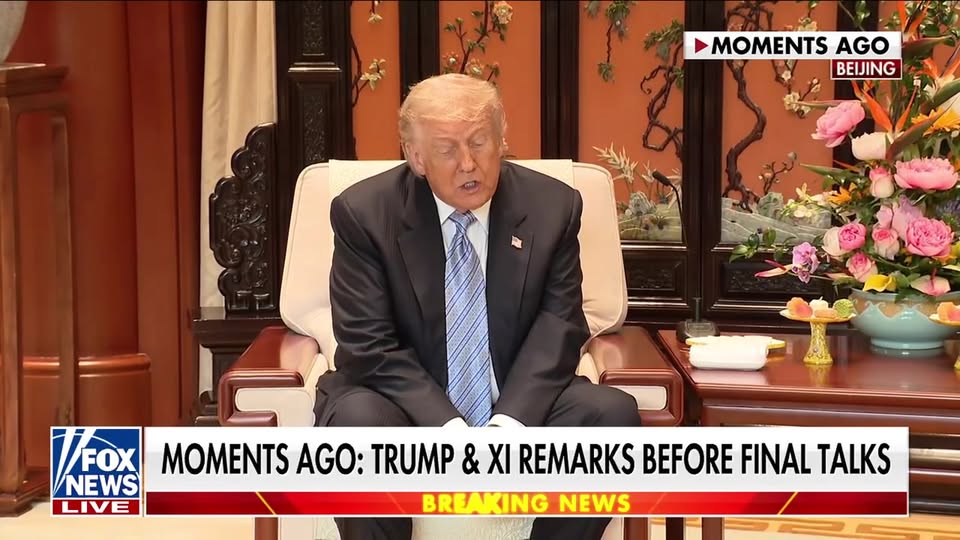
In a surprising revelation that could have significant implications for U.S.-China relations and Middle East diplomacy, President Donald Trump announced that he and Chinese President Xi Jinping share a common perspective on Iran’s nuclear ambitions and regional stability. Speaking publicly, Trump stated, “We feel very similar on Iran.” and emphasized their joint desire to see an end to Iran’s nuclear advancements.
During recent remarks, President Trump underscored the importance of addressing Iran’s nuclear program, stating, “We want that to end. We don’t want them to have a nuclear weapon.” This pronouncement marks a notable convergence in rhetoric between the two global powers, which have historically had differing views on Iran and the broader Middle East crisis.
Further, Trump highlighted the urgency of maritime security in key strategic waterways, remarking, “We want the straits open.” This comment likely references the Strait of Hormuz, a vital corridor for global oil trade that has often been a flashpoint for tension involving Iran, the U.S., China, and other regional players.
The synchronization of U.S. and Chinese positions on Iran signals a potential shift toward more coordinated diplomatic efforts or at least a shared narrative aimed at curbing Iran’s nuclear ambitions. While each country has its own strategic interests, this alignment could influence future negotiations or international sanctions regimes.
Analysts suggest that the shared stance might be the result of recent diplomatic backchannels or a mutual desire to maintain regional stability amid growing geopolitical tensions. Both nations are heavily invested in ensuring that the Strait of Hormuz remains open to prevent disruptions in oil supplies which could have global economic repercussions.
Experts warn, however, that rhetoric does not always translate into policy, and further diplomatic developments remain to be seen. Nonetheless, the public declaration from Trump signals a potential diplomatic opening with Beijing on Iran-related matters, an area long fraught with conflicting interests.
This alliance of sorts may also influence other international actors, such as European nations and Middle Eastern countries, as they observe the evolving U.S.-China approach to Iran. The coming months may prove critical as diplomatic negotiations and strategic dialogues continue to develop.
Where to Learn More
- Trump and Xi Jinping Share Similar Views on Iran’s Nuclear Threat – The New York Times
- US-China Consensus on Iran Signals a New Diplomatic Tone – The Wall Street Journal
- China and US Agree on Iran Concerns Amid Tensions – BBC News
- What Trump’s Remarks on Iran Signal for Global Diplomacy – CNN
- The Geopolitical Implications of US-China Agreement on Iran – Foreign Policy