
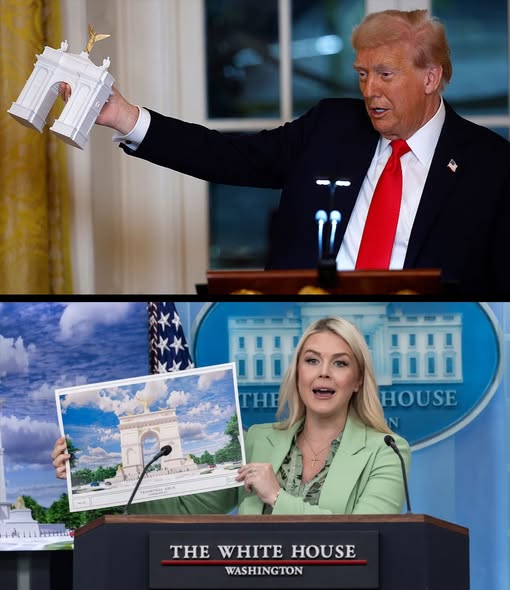
In a bold and controversial move, former President Donald Trump is proceeding with construction of a 250-foot Triumphal Arch situated between the Lincoln Memorial and Arlington National Cemetery— a project lacking congressional approval and already facing legal challenges. The effort has ignited alarm among critics who see it as yet another reckless gesture to elevate Trump’s ego at the expense of long-standing national landmarks.
The Public Citizen Litigation Group has firmly stated that, unless Congress enacts specific legislation authorizing the project, it is fundamentally illegal. Despite this, Trump appears determined, leaning heavily on a Commission of Fine Arts that he personally stacked with loyalists after dismissing the previous members. The commission has recently declared the project approved, effectively sidestepping standard approval processes. Yet, legal experts warn this maneuver is unlikely to hold in court, where the rule of law is expected to prevail.
Arriving at the echoes of history, critics and historians can’t help but draw parallels between Trump’s ambitions and the dark past of authoritarian architecture. The notorious architect Albert Speer, Hitler’s chief designer, conceived of a colossal triumphal arch for “World Capital Germania” — a monument so large that the Arc de Triomphe could fit inside its gates. Like Trump’s proposed arch, Speer’s design aimed to be a monument of personal ego, situated within a capital city meant to reflect the regime’s grandeur. Ultimately, Hitler’s arch was never built—soil stability issues along with other technical hurdles thwarted the project, a reminder of how nature and reality can limit even the most monumental ambitions.
Now, geotechnical testing is underway along the Potomac River, with engineers assessing whether Washington’s soil can support Trump’s colossal monument. The parallels are impossible to ignore: history seems to be repeating itself, with a man obsessed with legacy and grandeur pushing forward regardless of legal or technical constraints.
This isn’t an isolated incident. Trump’s penchant for flouting norms extends beyond this arch. During his presidency, he demolished the entire East Wing of the White House to build a $300 million ballroom—costly, no-bid contracts awarded to friends, and done without the necessary federal approval. Additionally, he painted the Lincoln Memorial Reflecting Pool “American Flag Blue” without adhering to procedures mandated by the National Historic Preservation Act. Multiple lawsuits have emerged, including one currently challenging his efforts to alter federal landmarks.
These actions suggest a pattern of “territory marking” — a desire to leave his mark on Washington’s historic fabric, often bypassing established protocols and disregarding centuries of tradition. Critics argue that these moves are less about preservation and more about satisfying a personal ego,” branding” the institutions with his own stamp, no matter the cost.
Legal battles continue to unfold, and the nation watches as a figure with deep historical echoes attempts to reshape the nation’s capital with projects that threaten to alter its historic landscape permanently. Whether those efforts will stand up to judicial review remains to be seen, but the message is clear: the obsession with monumentality and ego at any cost is a recurring theme in recent American political history.
Where to Learn More
- Legal Challenges Mount Against Trump’s Unlawful Arch Project – Public Citizen
- Trump’s Controversial Unapproved Arch Sparks Legal and Historical Fears – The New York Times
- Legal Battles Intensify Over Trump’s Unapproved Project in Washington – The Washington Post
- Historical Echoes in Trump’s Monumental Plans – Architectural Digest