
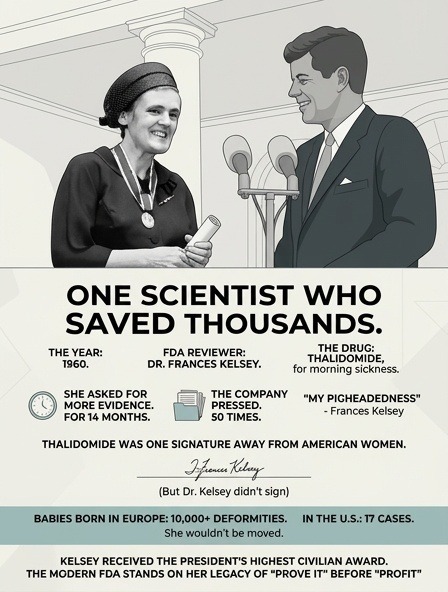
Sixty-four years ago, a routine FDA review nearly paved the way for a devastating pregnancy medication to be approved across the United States. Thalidomide, a drug that had already caused a birth defect crisis in Europe, was on the brink of being sold to American women—until one dedicated public servant, Frances Kelsey, refused to back down.
In 1960, thalidomide was the hottest sleeping pill in Europe. Marketed as completely safe for morning sickness, it was handed out freely, with the hope of easing pregnancy discomfort. Its manufacturer anticipated quick approval in the United States, and the application landed on Kelsey’s desk just a month after she started her job at the Food and Drug Administration (FDA). At first glance, the drug seemed promising—until Kelsey read the data.
She later recounted, “Here was a drug that looked like it should be no problem, but at the same time there was just a feeling that there was something in the data or the absence of data that was a cause of concern.” Recognizing the potential danger, she used her limited authority by requesting more evidence. When the manufacturer pushed back, she asked again—and again—for fourteen months, standing her ground amid mounting pressure.
The pharmaceutical company, desperate to rush the drug to market, came at her through various channels—threatening lawsuits, bypassing her authority, and even calling her names behind her back. They had product brochures printed, raw materials ready, and a batch of fifteen million pills set to be produced, all while they repeatedly tried to override her safety concerns.
Meanwhile, abroad, the consequences of their rush were becoming horrific. European babies born with severe birth defects—more than ten thousand—gave the world its first glimpse of thalidomide’s irreversible damage. In the U.S., only seventeen cases traced back to samples already distributed to doctors as “research,” a stark difference due to Kelsey’s vigilance.
Her refusal to yield delayed approval, ultimately preventing a nationwide tragedy. Her cautious judgment earned her the Presidential Medal of Freedom from President John F. Kennedy in 1962, only the second woman to receive the nation’s highest civilian award. The citation praised her “exceptional judgment in evaluating a new drug for safety,” which “has prevented a major tragedy of birth deformities.”
Her steadfast resistance led Congress to rewrite drug safety laws—eliminating the automatic sixty-day approval loophole and closing the backdoor of “research samples” to true clinical evidence before approval, prioritizing proof over profit.
Today, the FDA that Kelsey helped shape has become a cornerstone of American public health. But recent years have seen a troubling shift away from the careful scrutiny she championed. Under political pressure, the agency has dismissed veteran scientists and sidelined expert panels. Just recently, RFK Jr. fired all seventeen members of the CDC’s vaccine advisory panel in a single day, and the agency’s top vaccine scientist has left amid controversy.
Now, as vaccine hesitancy and resurging measles threaten hard-won progress—measles cases soaring to levels not seen since 1991—America’s faith in scientific expertise is under threat. The nation’s most basic public health protections are being questioned, replaced by a culture of “trust me, bro” policy decisions with potentially disastrous consequences.
Remembering Frances Kelsey’s unwavering stance reminds us of the critical importance of integrity and skepticism in safeguarding public health. Her bravery may seem like an old story, but its lessons are more urgent than ever. Refusing to rush science isn’t stubbornness—it’s protecting lives.
Where to Learn More
- How Frances Kelsey Helped Prevent a Thalidomide Tragedy — NPR
- How One Woman’s Resilience Saved Thousands from Thalidomide — History.com
- FDA Official Biography of Frances Kelsey — U.S. Food and Drug Administration
- Remembering Frances Kelsey and the Lessons She Taught About Regulatory Vigilance — Washington Post