
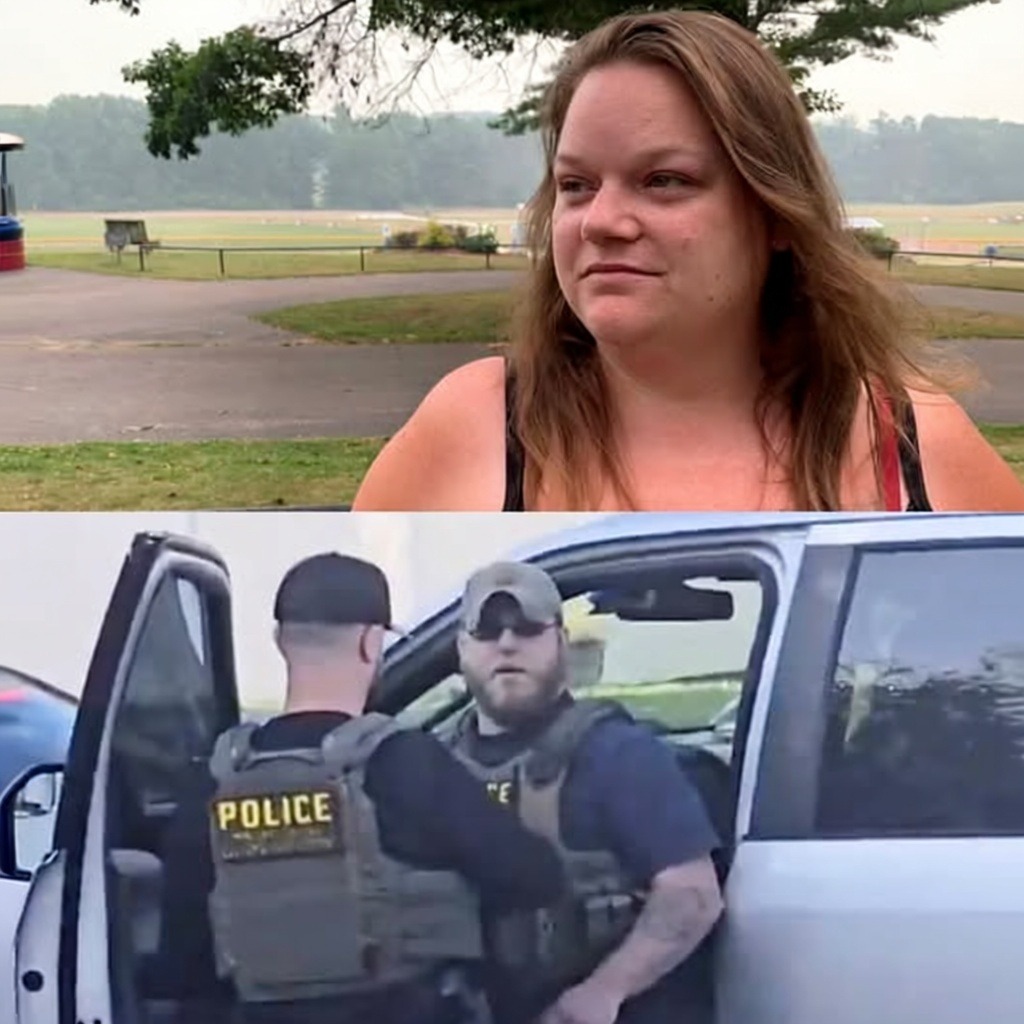
The recent fatal shooting of Johan Guerrero by an Immigration and Customs Enforcement (ICE) agent has ignited a national conversation about accountability, transparency, and the dangers lurking behind closed doors within federal law enforcement. What initially appeared to be a straightforward incident has now become a complex story involving abuse, prior warnings, and a government secrecy that many are calling into question.
The officer responsible for the shooting is identified as David Brouillette, 37, of Manchester, Maine. Four days after he shot and killed Guerrero—a 25-year-old delivery driver—federal authorities have refused to publicly name him, a courtesy typically not extended to local officers. It was Brouillette’s ex-wife, Ashley Brouillette, who broke the silence, calling the press to share details about her ex-husband and his recent conduct.
In an interview with the Portland Press Herald, Ashley revealed that Brouillette contacted her the Wednesday following the shooting. He admitted to the incident, claiming it was justified, and asked her to lie about his character to protect him. She described his tone as “unusually calm,” a detail that struck her as unsettling. When she refused his request—refusing to cover for him—she made a stand for her own integrity and safety.
More disturbingly, Ashley recounted a history of abuse during and after their marriage, including an incident where Brouillette reportedly threw boiling water at her while she was holding their child. Her mother has independently confirmed these accounts, adding layers to an already troubling picture of this man’s violent past.
But Brouillette’s history isn’t limited to this marriage. According to reports, he was subject to multiple requests for protective orders from a second ex-wife, citing stalking, harassment, and abuse directed at her and their daughter. Friends and relatives close to Brouillette have painted a portrait of a man prone to violence and holding racist beliefs—details that heighten concerns about his suitability for law enforcement duties.
The troubling part of this story? Officials and records had prior warnings about Brouillette’s behavior. Ashley states she reported concerns about his mental stability to his military superiors years ago. He previously served in the military and was then briefly a state corrections officer less than a year into his tenure—often unable to hold onto his role due to disciplinary issues, including shouting and insubordination. Despite this, he was hired by ICE earlier this year amid America’s rapid, quota-driven expansion of federal immigration enforcement under the Trump administration.
ICE’s defense of Brouillette centers on his “nearly a decade of federal law enforcement experience,” a term that feels hollow considering his documented instability—a volunteer fire department, twice removed for shouting and refusing orders, does not seem to match the experience required for off-the-books violence or deadly force.
Meanwhile, the victim, Johan Guerrero, is painted as an innocent bystander. Guerrero was shot four times behind the wheel of his vehicle outside his family’s home. His wife, Martha Karolina Rojas Alvarez, tearfully shared through a translator: “He did everything to see me happy.” Their young daughter, Dulce, now faces a world forever changed by violence and tragedy.
As public outrage grows, senators like Ed Markey have demanded accountability, showing up unannounced at ICE offices to press for answers. The investigation into the shooting remains open, but the government’s refusal to name Brouillette continues to feed suspicions and distrust.
What makes this story particularly damning is Brouillette’s effort to silence history. After his deadly act, he contacted his ex-wife, asking her to lie. Her refusal to partake in his cover-up ultimately brought his past abuses—and broader questions about vetting law enforcement—into the national spotlight.
This case underscores an urgent need for greater transparency and accountability within federal agencies, especially when lives are at stake. The question remains: if systemic warnings about Brouillette’s past had been heeded, could this tragedy have been prevented? As the community demands justice for Guerrero, the nation is watching to see whether the truth will finally come to light.
Where to Learn More
- Ex-ICE Officer Asked Ex-Wife to Lie After Shooting, Reveals Troubled Past – Portland Press Herald
- NPR: Concerns About ICE Officer’s History Highlight Systemic Failures
- The Atlantic: The Overlooked Warning Signs in Federal Law Enforcement Recruitment
- CNN: Calls for Transparency After ICE Agent’s Deadly Shooting