
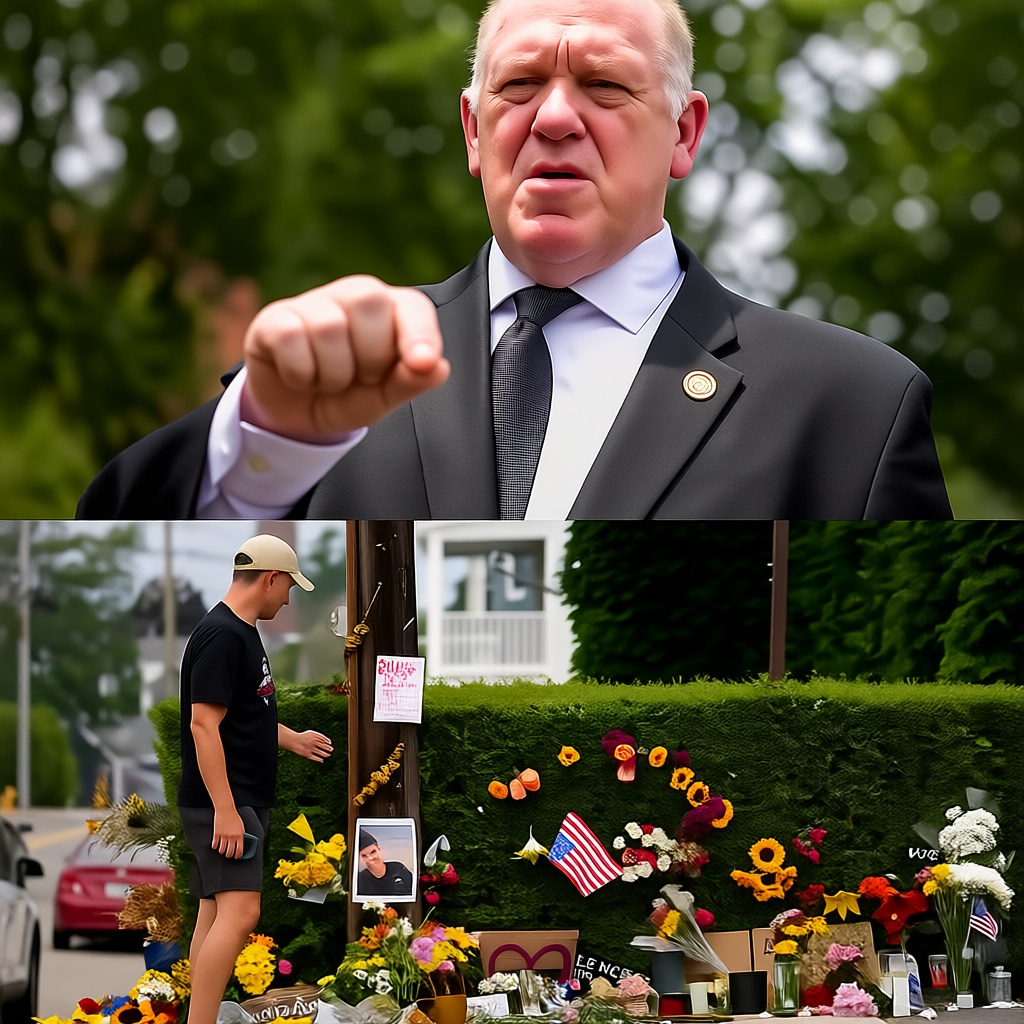
In a dramatic turn of events that has ignited fierce debates on immigration enforcement and political accountability, former Homeland Security officials and media figures are sounding alarms over a recent surge in violence linked to aggressive ICE operations. The controversy centers around a critical shift in enforcement policies that was abruptly reversed at the President’s instigation, with deadly consequences.
On Monday, in Biddeford, Maine, ICE officers shot and killed Johan Sebastián Durán Guerrero, a 25-year-old delivery driver with a valid work permit and a young daughter. Remarkably, sources told CBS News that Guerrero was not the intended target of the operation; law enforcement officers reportedly mistook him for someone else. This incident marked a somber escalation in a string of deadly confrontations fueled by out-of-control enforcement tactics.
Just six days earlier, in Houston, another tragedy unfolded when ICE agents shot and killed Lorenzo Salgado Araujo, a 52-year-old man with deep roots in the community who had been residing in the U.S. for 35 years. Araujo, a father of three, was reportedly driving a work crew to a job site when officers opened fire, believing his van resembled the vehicle they had targeted. Again, official sources confirmed he was not the intended person.
Amid mounting criticism, Homeland Security Secretary Markwayne Mullin issued a stark directive on Tuesday: ICE officers were ordered to halt vehicle stops immediately and shift focus to other enforcement methods. The decision was based on internal reviews indicating that traffic stops, especially ongoing pursuits, posed undue risks to public safety and innocent lives.
But the pause in enforcement was short-lived. According to reports, a single Tweet from President Donald Trump on Wednesday morning sparked a swift reversal. After watching cable news coverage critical of the department’s new direction, Trump took to Truth Social, declaring: “we CANNOT give up one of I.C.E.’s most important and effective Crime Fighting tools, THE TRAFFIC STOP!”
Within hours, a White House official confirmed that the post effectively rescinded the DHS memo—without any formal review or new policy process. The directives issued by Mullin’s department were overridden by the President’s instant Twitter intervention, causing a complete reversal of the enforcement pause.
This rapid policy flip-flop lasted approximately twenty-four hours but left a trail of tragedy in its wake. Critics argue that the government’s own hesitation to proceed with enforcement measures saved lives—lives that could have been lost had officers continued high-risk stops. Now, with enforcement back in full swing, advocates are warning of increased danger and further bloodshed.
Veteran immigration enforcement expert Tom Homan, who recently appeared on Fox News, warned that unless Democrats “shut their mouth” and let ICE do its job, there will be more “bloodshed.” He emphasized that the violence in recent days underscores how political pressure and public scrutiny have directly influenced deadly law enforcement encounters.
Homan’s stark comments reveal a sobering reality: the enforcement policies that temporarily reduced bloodshed were ultimately undone not by policy debate or community consultation, but by a presidential tweet. This pattern raises concerns over accountability, the politicization of immigration enforcement, and the human cost of decisions made based on media narratives and political expediency.
As Guerrero’s three-year-old daughter mourns her father, the nation confronts urgent questions about how immigration policies are shaped—and at what price—and whether the cycle of violence can be broken again. The message is clear: words from leadership have power, and in this case, they have directly impacted life and death.