
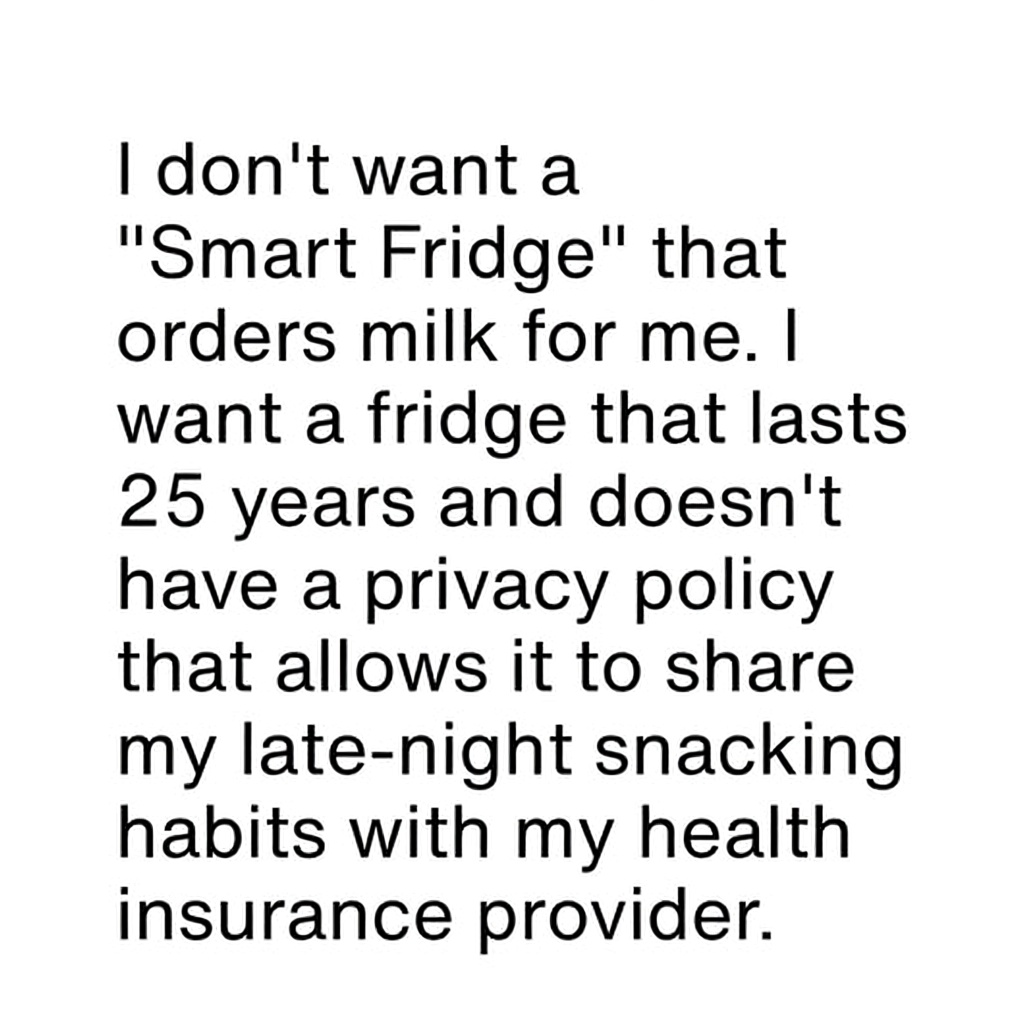
In a recent social media post that quickly went viral, a pointed critique of the modern smart home industry has resonated with thousands of users. The message was clear: “I don’t want a ‘Smart Fridge’ that orders milk for me. I want a fridge that lasts 25 years and doesn’t have a privacy policy that allows it to share my data.”
This statement encapsulates a growing frustration among consumers overwhelmed by the constant push for connected, ‘smart’ appliances. While innovations like refrigerators that track inventory or automatically reorder groceries may seem convenient, many people are beginning to question whether these features are worth the Privacy Trade-offs and short product lifespans they often entail.
The Rise of Smart Appliances: Convenience or Privacy Nightmare?
Over the past decade, the home appliance industry has undergone a technological revolution. Smart refrigerators can monitor food freshness, order replacements, or even suggest recipes. But beneath the helpful facade lies a complex web of data collection, often with ambiguous privacy policies.
Experts argue that these connected devices are part of a broader surveillance economy where user data—ranging from shopping habits to personal routines—is analyzed, sold, or shared with third parties. As one social media commenter pointed out, many consumers feel that privacy concerns outweigh the convenience benefits.
Durability Over Innovation: The Consumer Push
The viral message also emphasized the importance of longevity, with a desire for appliances that last decades rather than a few years, which aligns with anti-waste consumer movements and sustainability efforts. Many modern appliances are designed with planned obsolescence, encouraging frequent replacements and, consequently, increased electronic waste.
Consumers are increasingly advocating for durable, repairable, and non-connected appliances. “I want a fridge that lasts 25 years and doesn’t come with a privacy policy,” the social media post echoed—highlighting a yearning for simplicity and respect for personal boundaries in a digital age.
Industry Response and the Path Forward
As public sentiment shifts, some manufacturers are starting to respond by offering privacy-centric or more durable options. Companies emphasizing open-source, repairable, and non-networked appliances are gaining attention. Meanwhile, regulators are considering tighter privacy laws for IoT devices to protect consumers from invasive data practices.
Ultimately, the debate underscores a core tension: balancing technological innovation with the fundamental rights to privacy and product longevity. Consumers increasingly want connectivity that serves them, not controls them.
Conclusion
The viral social media post encapsulates a broader movement toward mindful consumption in the digital age. As technology continues to evolve, the call for appliances that are built to last and respect privacy is likely to grow stronger, prompting industry leaders to reconsider what genuine value looks like in the modern home.
Where to Learn More
- The Privacy Risks of Smart Home Devices – Wired
- Smart Appliances and Data Privacy: What Consumers Need to Know – The Guardian
- Building Durable Appliances: The Future of Long-Lasting Tech – TechRadar
- FTC Focuses on Privacy Risks of Connected Devices – Federal Trade Commission