
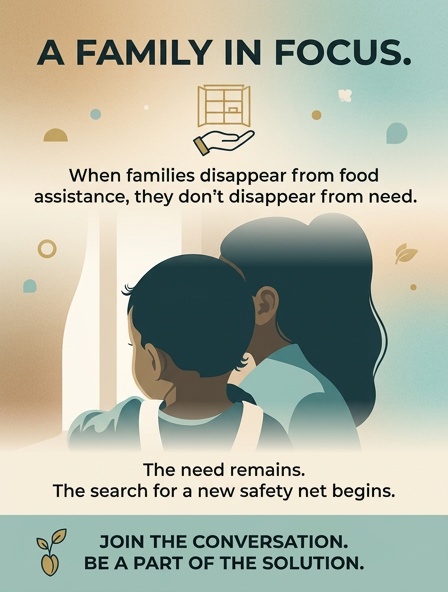
Amid ongoing debates over social welfare programs, a stark reality persists: **when families are no longer counted in food assistance statistics, their struggles often continue unabated**. Social media campaigns and recent investigative reports are shining a light on the troubling disconnect between official numbers and the lived experiences of vulnerable households.
For years, policymakers and advocacy groups have tracked the number of families enrolled in Supplemental Nutrition Assistance Program (SNAP) benefits. When these figures decline, it is often interpreted as a sign of economic recovery or program success. But critics warn that *disappearances from the rolls do not mean the need has vanished.* In fact, research indicates that many households simply fall through the cracks, losing access due to bureaucratic hurdles, shifting eligibility, or fear of stigma.
Social media stories highlight families who are no longer receiving aid but still face food insecurity. One viral post features a mother, Sarah, who lost her SNAP eligibility after her child’s school income was mistakenly recorded as part of her household income. Despite her ongoing struggle to put food on the table, her case was closed, forcing her to seek food banks and community resources that often have limited capacity.
Data shows that during economic downturns or after policy tightening, the number of people officially on assistance sometimes decreases—yet, these families’ needs do not. According to a 2024 report from the National Center for Food Assistance Reform, many families “drop out” because of confusing recertification processes, transportation barriers, or misconceptions about eligibility. These families become invisible to official counts but remain vulnerable to hunger and health issues.
The consequences of this invisibility are severe. Children in food-insecure homes are more likely to suffer from developmental delays, poor academic performance, and chronic health conditions. Adults face increased stress, lower productivity, and health complications stemming from inadequate nutrition. Yet, without official numbers, these issues often go unrecognized in policy discussions and resource allocations.
Advocates argue that the focus should shift from mere enrollment statistics to **measuring actual food security**. Innovative programs and community-based initiatives are attempting to fill the gaps, providing supplemental support even after families leave the official assistance rolls. These efforts recognize that the end of government assistance doesn’t equate to the end of need.
As social media continues to spread stories of families “missing” from aid programs but still struggling, policymakers face mounting pressure to reevaluate how they measure and address food insecurity. Ensuring that vulnerable families remain supported—regardless of official status—is crucial for building an equitable and healthy society.
Where to Learn More
- Understanding Food Insecurity in America – National Food Bank Association
- SNAP Eligibility and Challenges – USDA Food and Nutrition Service
- The Impact of Food Insecurity on Children – National Center for Children in Poverty
- Challenges in Food Assistance Benefit Participation – Urban Institute