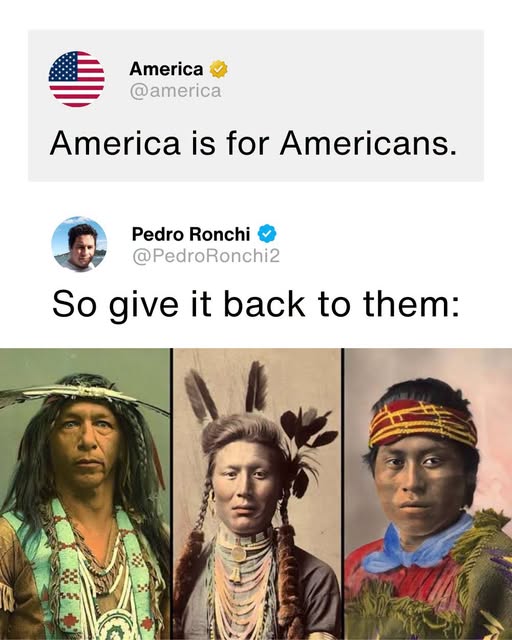
A recent social media post has ignited a fiery online debate surrounding the core identity and sovereignty of the United States. The post features a powerful image emblazoned with the phrase “America @america America is for Americans.” accompanied by a provocative comment from user @PedroRonchi2: “So give it back to them.”
The image, which quickly went viral across platforms like Twitter and Facebook, has struck a chord—resonating with some who feel it emphasizes the importance of prioritizing American citizens and protecting national interests amid growing discussions on immigration, economic policies, and cultural identity.
Supporters of the message argue that this rallying cry is about national sovereignty. They contend that policies emphasizing border security, immigration reform, and prioritization of American workers are essential to safeguarding the country’s future. “America is for Americans,” one user commented, echoing sentiments of patriotism and the need to focus on domestic priorities.
However, critics quickly pushed back, warning that such rhetoric risks fostering exclusion and xenophobia. Many point out that the United States has historically been a nation of immigrants and that diverse cultural contributions have been an integral part of its identity. “This kind of messaging can fuel division and undermine the inclusive values America has stood for,” said an immigrant rights advocate.
The debate underscores ongoing tensions within American society about immigration, economic disparity, and national identity. Discussions around these issues have been amplified in recent years by political rhetoric, policy changes, and economic uncertainty.
Twitter users also noted the potential implications of such slogans in the realm of policy and public discourse. Some worry that framing the nation as exclusively for native-born Americans could lead to stricter immigration laws or marginalized communities feeling unwelcome.
This viral post has become a focal point for both patriotic pride and broader conversations about what it means to be American in the 21st century. As the debate unfolds on social media, it exemplifies how digital platforms continue to shape and reflect the complex narratives about national identity.
While the message resonates with a segment of the population, others urge caution, emphasizing that America’s strength lies in its diversity and principles of inclusion. As political figures and community leaders weigh in, the discourse remains vibrant and evolving, as citizens grapple with questions of belonging, rights, and national values.