
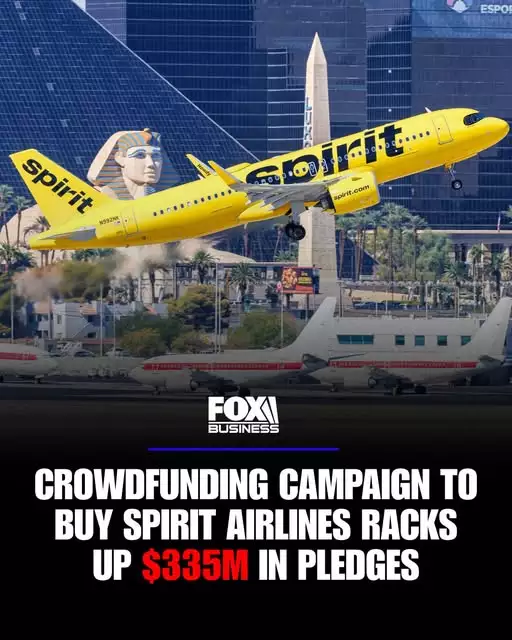
A spontaneous movement ignited on social media is turning heads in the aviation industry. Just one week after Spirit Airlines abruptly shut down, a TikTok creator named Hunter Peterson has launched a crowdfunding campaign that’s captured the imagination—and wallets—of thousands of supporters. The campaign has already amassed an astonishing more than $335 million in pledges, suggesting that the idea of resurrecting the budget airline somehow resonates more than ever.
Spirit Airlines, known for its low fares and no-frills service, ceased operations unexpectedly last week, leaving thousands of passengers stranded and sparking widespread frustration. In a surprising twist, Peterson took to TikTok with a bold proposal: “Why not bring Spirit back by making it a public, people-owned airline?” His idea? Nationalize Spirit Airlines, which he suggests could be operated as a collectively owned enterprise, giving consumers a stake in the airline’s future.
The campaign’s messaging hinges on the notion of democratization—transforming Spirit from a corporate-funded entity into a venture owned by ordinary travelers and supporters. Peterson elaborates, “This is a genius idea: We nationalize Spirit Airlines, owned by the people… We make a new airline.” His campaign website, opirit.com, invites supporters to pledge their financial backing, effectively turning the social media stunt into what some are calling a potential “people’s airline.”
The viral momentum is unprecedented. Within days, pledges surged past hundreds of millions of dollars, indicating a level of public interest that surprises industry analysts. As of now, supporters argue that if enough contributions are gathered, the new airline could become a reality—potentially disrupting traditional airline industry models and sparking broader conversations about public ownership of transportation.
Experts remain cautious, noting the logistical and regulatory hurdles associated with launching or resurrecting an airline through crowdfunding. However, the sheer scale of financial pledges and social media buzz underscores a deep dissatisfaction with the current airline industry, especially amidst rising transportation costs and declining service quality.
The campaign also highlights a broader cultural phenomenon: the rise of social media as a catalyst for real-world change. What began as a viral joke or viral advocacy on TikTok has now garnered the attention of major industry players and media outlets, raising questions about what is possible when citizens leverage digital platforms to challenge corporate dominance.
While the future of Spirit Airlines remains uncertain, the campaign’s success indicates that a significant segment of the public is eager for an alternative—one that prioritizes ownership by the people rather than shareholders. Whether this movement will translate into actual airline ownership or remain a social media phenomenon remains to be seen, but one thing is clear: the airline industry is facing a new kind of challenge.