
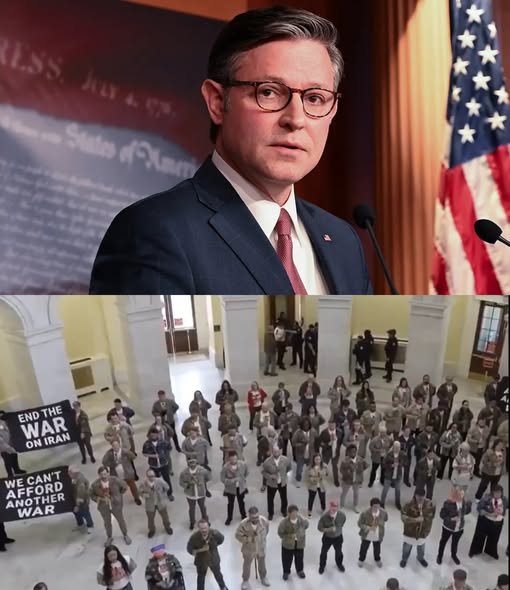
In a powerful act of protest that has quickly gone viral across social media, over 60 veterans gathered at the U.S. Capitol to demand that Congress cease funding potential new military conflicts, specifically against Iran. These veterans, representing organizations such as Veterans For Peace, About Face, Common Defense, and others, made a poignant statement with their presence — one rooted in the sacrifices they made and the lives lost in previous wars.
The veterans assembled in the Cannon Rotunda, carrying symbolic items including red tulips—honoring Iranian civilians killed by U.S. strikes—and a folded American flag, representing the 13 U.S. service members who have already lost their lives in ongoing conflicts. Their simple, yet powerful, message was clear: “Not another nickel, not another dime. We won’t pay for Trump’s war crimes.”
Their goal was straightforward — to meet with House Speaker Mike Johnson to discuss their concerns about the direction of U.S. military policy. However, Johnson refused to come out of his office, declined to send a staff representative, and outright refused to accept the symbolic flag. Instead, Capitol Police forcibly zip-tied many of the veterans and escorted them out of the building, illustrating a stark suppression of their plea for dialogue.
Among those speaking before their removal was Mike Prysner, an Iraq War veteran and executive director of the Center on Conscience and War. His words resonated deeply with anyone paying attention:
“The war I was sent to senselessly claimed the lives of thousands of Americans and a million Iraqis. Like the other veterans here with me today, I have spent the last two decades wishing I could turn back the hands of time and refuse to go. Service members have that chance right now.”
The veterans’ presence in Washington coincides with growing concern among active-duty service members, over 100 of whom have already filed as conscientious objectors to avoid deployment to Iran. Their message is clear: they want fellow service members to know they have a legal, moral right to refuse participation in offensive wars—a stark contrast to political inaction and the ongoing push for military escalation.
The tension around this issue comes as Congress faces a critical deadline: the expiration of a ceasefire agreement scheduled for tomorrow. The U.S. military’s next move remains uncertain, with bombing campaigns and military strikes hanging in the balance. Meanwhile, House Speaker Mike Johnson refuses to engage with those who have firsthand experience and a moral stake in the debate.
By shutting out these veteran voices, critics argue that Johnson demonstrates a profound disregard for constitutional governance and the human cost of war. These veterans earned the right to be heard—through their service, their sacrifice, and their willingness to speak out against future conflicts. Their protest underscores a rising plea for accountability and a call to prevent the next devastating war from unfolding unnoticed.
As tensions mount and decisions loom, the question remains: will the leadership listen, or will they continue to dismiss the voices of those most impacted by America’s wars?