
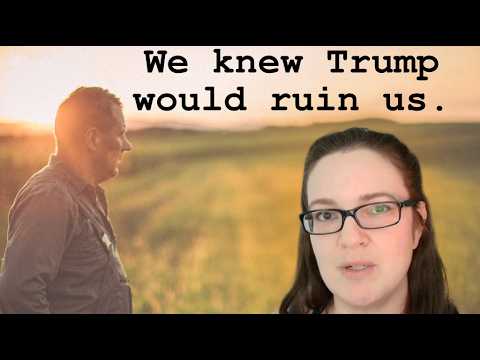
The 2016 presidential election marked a significant turning point in American politics, especially for rural communities. The title “Why Farmers Voted For Trump” encapsulates a pivotal question that illustrates the dynamics of political allegiance in America’s heartland. As farmers faced economic challenges and political decisions that impacted their livelihoods, many turned to Donald Trump’s campaign, seeking a leader who would promise reform and relief.

During his campaign, Trump appealed directly to farmers and the agricultural industry, often emphasizing issues such as trade, regulations, and tax policies. Many agriculture-dependent voters found a resonating message within his promises to renegotiate trade agreements, particularly in the context of China and the European Union. The ongoing trade wars, while controversial, were seen by some in the farming community as a necessary stance against unfair trade practices that had been detrimental to American growers.
Additionally, Trump’s critiques of the regulatory environment appealed to farmers who often felt burdened by federal regulations affecting water usage, land management, and pesticide application. His administration’s commitment to reducing government oversight was welcomed by those who believed it would lead to increased productivity and lower operational costs on farms.
The shift in support also came at a time when the Democratic party had increasingly focused on urban concerns, sometimes alienating the rural electorate. Farmers, who often hold conservative views on social issues, found a home in Trump’s populist rhetoric and his rejection of the political establishment — a factor that resonated with many who felt forgotten by traditional political leaders. This alignment of values and priorities resulted in a tangible shift of support toward the Republican candidate.
Understanding why farmers voted for Trump requires a nuanced exploration of economic pressures, regional sentiments, and cultural values, all of which continue to shape political identities in America today. As the political landscape evolves, the implications of this voting bloc remain significant for both parties moving forward.
Where to Learn More
- NPR – Insightful news covering various aspects of U.S. politics and agriculture.
- Politico – A comprehensive source for political news and analysis, including rural voting trends.
- The Guardian – Offers in-depth articles exploring the dynamics of farm policies and the rural vote.
- The Wall Street Journal – For business and economic perspectives influencing farmer votes and trade decisions.
- C-SPAN – Features recordings of political events, helpful for understanding context around agricultural policies.