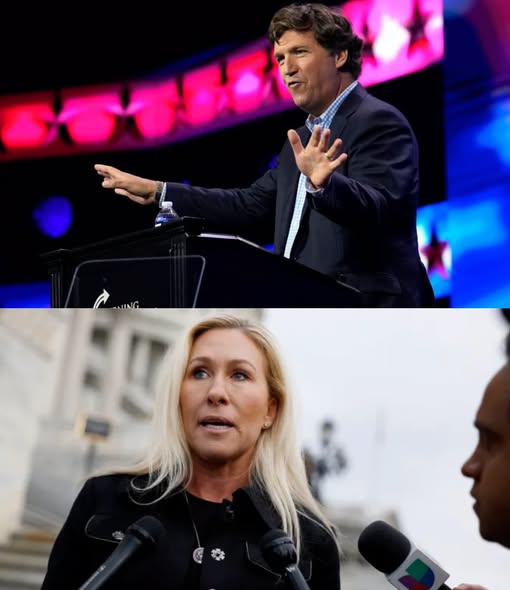
The political landscape surrounding former President Donald Trump is experiencing a seismic shift, with signs mounting that his once-loyal right-wing coalition is splintering from within. The latest and most striking development? Tucker Carlson, the influential voice who helped shape and elevate Trumpism through his nightly media platform, publicly announced he’s walking away from the Republican Party—and came with blistering criticism.
In a candid appearance on a popular podcast, Carlson declared, “I would not support the Republican Party. There’s no chance I would support the Republican Party.” He then delivered a line that is resonating across social media and political circles: “I’m out. And if I’m out, then I think a lot of other people are out, too.” This stark rejection from a figure so central to the MAGA movement signals a deeper disconnect between Trump’s core supporters and the Republican establishment they once overwhelmingly backed.
Carlson’s departure isn’t happening in a vacuum. Within hours, Rep. Marjorie Taylor Greene—an outspoken Trump ally and one of the party’s most vocal supporters—appeared to echo Carlson’s sentiments. She tweeted her frustration with the GOP’s recent direction, claiming, “There is A LOT of us that are absolutely fed up,” and accused the party of having “betrayed its voters and country.”
These allied defections highlight a broader reality: the traditional Republican coalition that once rallied around Trump’s “America First” platform is fraying. The reasons are manifold. The party’s push towards aggressive foreign policy, including an Iran war that many base supporters oppose, has exposed ideological divides. At the same time, the economy is under strain—costs of tariffs have hurt many working-class Americans, yet Trump’s narrative on inflation remains disconnected from the economic pain felt by many.
Meanwhile, the political harmony that once characterized Trump’s loyalists is evaporating. His own senators are raising eyebrows about foreign policy decisions, and the intra-party revolt is growing louder. Trump’s aides publicly call opponents “fools” and “stupid,” but the real concern is the lack of unified loyalty. As Carlson and Greene pivot away, it suggests a fundamental re-evaluation among once-devoted supporters: loyalty is no longer guaranteed when the perception of winning diminishes.
This is the gradual unraveling of what seemed like an unstoppable political force built on relentless media influence, populist rhetoric, and a vow to keep winning at all costs. With the media figures who helped cultivate the MAGA movement now publicly abandoning ship, the warning signs are clear: the movement’s foundation isn’t as solid as it appeared. It’s a slow, almost imperceptible process, but the signs point toward a decline that could redefine American politics for years to come.
It’s important to note, however, that Carlson and Greene’s exits are not necessarily driven by moral principles or ideological shifts. Instead, they are acting out of strategic calculation—smelling weakness and a potential slide into irrelevance. Their disaffection isn’t aboutprincipled opposition but survival, and a desire to distance themselves from a sinking ship. As the political waters churn, the message is loud and clear: when victory starts slipping away, so too does loyalty.
Where to Learn More
- Tucker Carlson’s Break with the GOP: What It Means for Trump – The New York Times
- The GOP’s Inner Crisis: Defections and Discontent Grow – The Washington Post
- Marjorie Taylor Greene Joins Carlson in Fracturing the Party – Politico
- Analysis: The Slow Disintegration of Trump’s Political Empire – BBC News