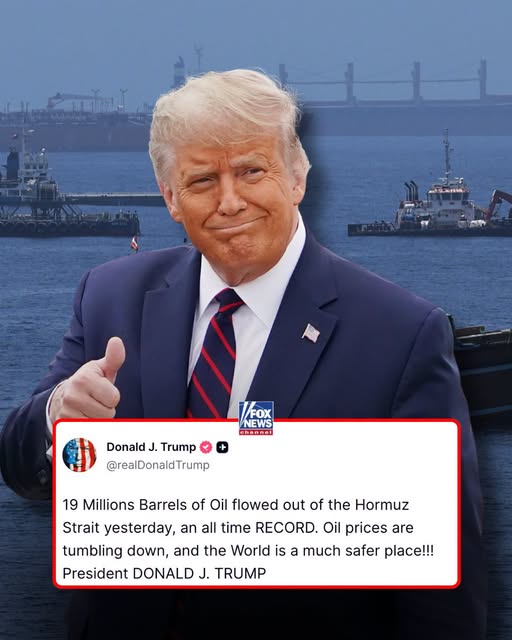
In a surprising turn of events, former President Donald Trump took to social media to announce what he claims is a historic milestone in global oil transportation. According to his recent post, a staggering 19 million barrels of oil flowed through the Strait of Hormuz yesterday — setting a new record for the corridor that connects the Persian Gulf with the Arabian Sea.
“19 Million Barrels of Oil flowed out of the Hormuz Strait yesterday, an all-time RECORD,” Trump wrote on his official platform. “Oil prices are tumbling down, and the World is a much safer place!!!” The bold declaration has quickly garnered attention across social media networks and oil markets, sparking debates about its implications for global energy and geopolitics.
While some analysts view this statement with cautious skepticism, the figure signals a significant increase in oil shipments passing through one of the world’s most vital maritime chokepoints. The Strait of Hormuz, located between Oman and Iran, is known for its strategic importance, with roughly 20% of the world’s oil passing through its waters daily. Any surge or decrease in this corridor’s activity can have immediate effects on global oil prices and geopolitical stability.
Notably, Trump’s assertion of this record came amid broader discussions about energy exports, especially considering ongoing tensions in the Middle East. Some experts suggest that such an unprecedented shipment volume could reflect a shift in regional dynamics, potentially linked to increased oil production or strategic exports by Gulf countries or Iran.
However, industry insiders and geopolitical analysts are urging readers to examine the source and verify the numbers. Official data from agencies like the U.S. Energy Information Administration (EIA) or international maritime tracking organizations have yet to confirm these figures. Historically, figures of this magnitude are closely scrutinized, given their potential to influence oil prices, which have been volatile amid recent global economic fluctuations.
This announcement has also caused a ripple effect on global markets, with oil prices experiencing noticeable declines. Some traders interpret this surge as an indication of increased supply availability, leading to fears of oversupply and reduced energy costs worldwide.
Despite the excitement or skepticism surrounding the claim, the social media buzz underscores an ongoing public fascination with energy security, geopolitical maneuvering, and economic stability. As authorities and market observers continue to analyze the situation, one thing remains clear: the flow of oil through the Strait of Hormuz remains a critical, and often volatile, factor in the global energy landscape.
Where to Learn More
- U.S. Energy Information Administration (EIA) – Up-to-date data on global energy markets
- Bloomberg Energy Section – Industry analysis and market impact stories
- Reuters – Middle East Oil & Politics – Insights into regional geopolitics and oil shipments
- CNN World News – Coverage on Middle East tensions and global oil developments