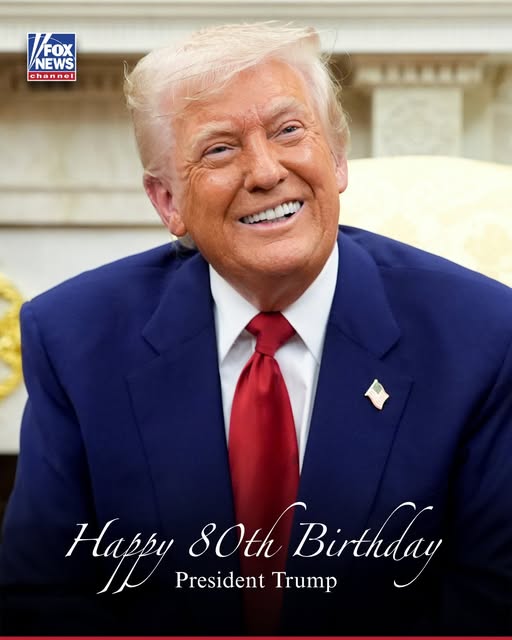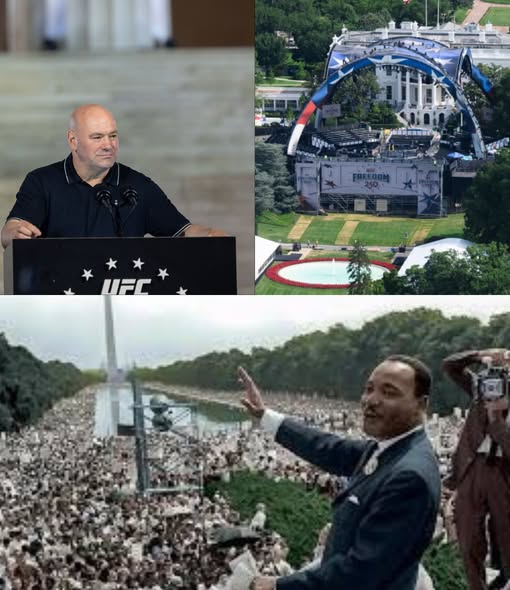
In a spectacle that has many Americans stunned and others outraged, former President Donald Trump is staging a series of high-profile “cage fights” on the South Lawn of the White House, turning the historic location into a battleground of spectacle and symbolism. The event, scheduled for this Sunday, coincides with Trump’s 80th birthday—a fact not lost on observers, as the fights are set against the backdrop of America’s most revered monuments.
The cage fights take place in a colossal $60 million UFC octagon, erected amidst the grass of the White House lawn. Ironically, this area—where Martin Luther King Jr. once declared, “I have a dream,” and Marian Anderson performed after being barred from speaking—has become the staging ground for what critics are calling a “blood-sport gala.” The site, long regarded as a symbol of civil rights and hope, has been transformed into a venue for a billionaire spectacle designed to entertain the privileged.
The staging includes a backdrop of the Lincoln Memorial, where historical figures such as King and Anderson once stood for justice and equality. Now, these historic steps are hosting press conferences and stare-downs for the world’s most powerful—set dressed for a fight, seemingly in mockery of the struggles that took place there decades ago.
The event’s disturbing symbolism runs deep. According to reports, President Trump has personally secured control of about 1,400 of the 4,300 seats available on the South Lawn. With the staged fights and a lavish atmosphere, critics argue that the event is a grotesque celebration of excess and power at a time when many Americans are struggling economically. Additionally, commemorative coins featuring Trump’s face are reportedly being sold for up to $12,000 each, further fueling accusations of greed and exploitation.
Another controversial detail: Secretary of State Marco Rubio has signed a formal agreement making the U.S. government a business partner of the cage-fighting company—another sign that political figures are entwined with what many see as spectacle capitalism.
Across the Potomac River, construction continues on a gargantuan 250-foot “triumphal arch,” more than twice the height of the Lincoln Memorial and estimated to cost up to $100 million. When asked about its purpose in a press conference, Trump bluntly answered, “Me,” fueling widespread criticism that these extravagant projects are self-glorifying acts rather than acts of national service or cultural homage.
The American public’s reaction has been mixed but largely condemning. A recent Reuters/Ipsos poll indicates a mere sixteen percent of respondents believe that staging cage fights at the White House is appropriate—an overwhelming majority declining to endorse such a spectacle being held in their name.
Historically, the founders expressed clear opposition to such theatrics. In 1813, Thomas Jefferson famously responded to a proposal that he and John Adams should settle their differences in a gladiatorial fight of sorts: “Nothing in the universe could induce me to it.”
Today’s spectacle reflects a dramatic departure from the constitutional ideals of civility and respect for history. What was once a place marked by revolution and progress now seems transformed into a stage for a self-indulgent display that blatantly disregards the weight of history and the dignity of the institutions it is supposed to honor.
As America watches these events unfold, the question remains: what message are we sending about our values, history, and the state of national discourse? The answer, increasingly, appears to be that spectacle and power have taken precedence over the principles that once defined the nation.
Where to Learn More
- Analysis of the White House Events and Their Cultural Impact – The New York Times
- Criticism and Public Opinion on Political Spectacles at Historic Sites – The Washington Post
- Polls on Public Sentiment About the White House Cage Fight Event – Reuters
- Coverage of the Construction of the “Triumphal Arch” and Its Symbolism – CBS News
- Historical Perspectives on Civil Rights Sites and Their Significance – History.com