
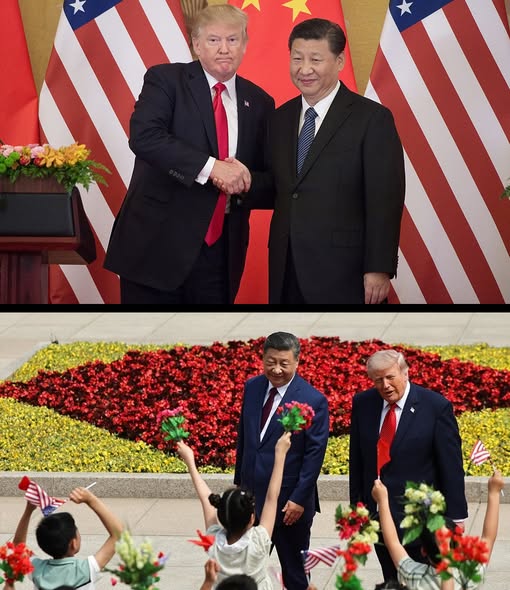
What was billed as a historic opportunity between the United States and China turned into a diplomatic spectacle that left much to be desired. Former President Donald Trump’s two-day visit to Beijing promised groundbreaking trade agreements and renewed relations but ultimately delivered little more than a handshake, a now-infamous “lecture about falling empires,” and a peculiar gift that seemed more symbolic than substantive.
Trump departed Beijing amid claims of “fantastic” trade deals and assertions that “a lot of different problems” were settled. Yet, behind the scenes, analysts from the Brookings Institution were blunt in their assessment: the summit accomplished remarkably little. Despite Trump’s declarations of success, the meeting seemed to serve only to reinforce the status quo, with American leverage over China quietly evaporating. It was, some experts suggest, a diplomatic step back rather than forward.
The summit’s climax—or perhaps its awkward moment—came during the opening remarks when Chinese President Xi Jinping referenced the idea of America as a declining superpower. Trump responded with a rapid post on Truth Social, claiming that Xi was speaking about Joe Biden, not him. But this was more spin than fact. Multiple international outlets have reported a growing consensus within China’s leadership that the U.S. is indeed experiencing a decline in global influence—something Chinese officials have increasingly articulated in official rhetoric. Meanwhile, Biden’s record shows he has maintained direct engagement with Xi, including a summit in California earlier this year, debunking Trump’s boast that Biden could never have secured such a meeting.
Adding a bizarre twist to the trip was the parting gift from Xi—a packet of rose seeds from the historic Zhongnanhai gardens. Xi, a master of diplomacy and subtlety, knew well that Trump had recently paved over the White House Rose Garden to build a large patio reminiscent of Mar-a-Lago’s outdoor aesthetic. Trump, seemingly oblivious, gushed about the “most beautiful roses anyone has ever seen,” expressing a desire to plant them in his own garden. The gesture was rich with irony—a symbolic “gift” from a country that had just subtly mocked Trump’s legacy, while Trump eagerly embraced it as a personal treasure.
In the end, Trump’s trip to Beijing has become another chapter in the parade of moments that highlight his unique brand of diplomacy—one marked more by spectacle than substance. With two of the world’s most powerful men seemingly playing their roles to perfection, neither noticing they had been publicly outmaneuvered, it’s safe to say that under the Trump era, America’s standing on the world stage is viewed more as a punchline than a geopolitical powerhouse.