
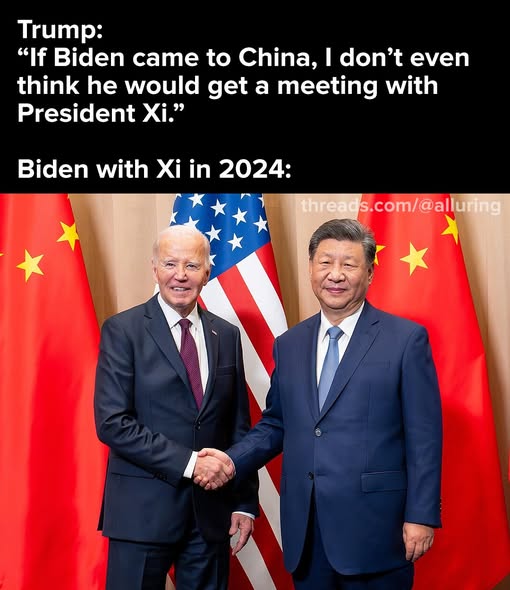
Recent viral social media posts have reignited debates over diplomatic access and the influence of U.S. leadership on the global stage, especially concerning China’s top leadership. An image circulating widely shows an iconic view of the Oval Office, paired with a provocative quote attributed to former President Donald Trump: “If Biden came to China I don’t even think he would get a meeting with President Xi.” This statement has been juxtaposed with a clip from recent 2024 discussions showing President Joe Biden meeting with Chinese President Xi Jinping, fueling a wave of commentary and speculation among social media users.
The post seems to suggest that, in Trump’s view, current U.S. diplomatic relations are more strained or less effective than they might have been under his administration. Trump has long positioned himself as a hardline negotiator, often criticizing Biden’s approach to China. However, the image raises questions: Is this a genuine critique, or is it part of the politically charged rhetoric that often dominates social media platforms?
Meanwhile, the depiction of Biden confidently meeting Xi in 2024 underscores the ongoing diplomatic engagements between the U.S. and China, despite tensions over trade, technology, and human rights issues. The clip from the recent meeting contradicts the earlier exaggerated claim, emphasizing that high-level diplomatic talks continue to happen, regardless of political rhetoric. This discrepancy highlights how social media might distort perceptions of international relations, with some users granting more weight to provocative statements than actual diplomatic realities.
The viral content reflects broader concerns about access and influence in global diplomacy. Critics argue that narratives like Trump’s—whether accurate or exaggerated—can undermine diplomatic efforts or sway public opinion about the effectiveness of current U.S. leadership. Conversely, supporters may see it as validation of their skepticism toward Biden’s foreign policy approach.
Experts caution that social media snippets often lack nuance and context, making it essential for the public to consult multiple sources for a fuller understanding of diplomatic dynamics. Furthermore, the online dispute underscores the importance of transparent and consistent diplomacy, especially with a complex superpower like China.
As viewers navigate this digital landscape, it’s clear that rhetoric and reality often collide, prompting citizens to question not only leadership styles but also the narratives shaping their understanding of international affairs. Whether these viral posts are attempts at satire, political commentary, or misinformation, they undeniably highlight how social media continues to influence perceptions about global diplomacy—and the expectations placed on world leaders.
Where to Learn More
- Analysis of Biden-Xi meetings and U.S.-China relations – CNN
- Trump’s statements on China and diplomatic access – The Wall Street Journal
- Understanding China’s perspective on U.S. diplomacy – BBC News
- Insights into U.S.-China diplomatic relations – Foreign Affairs