
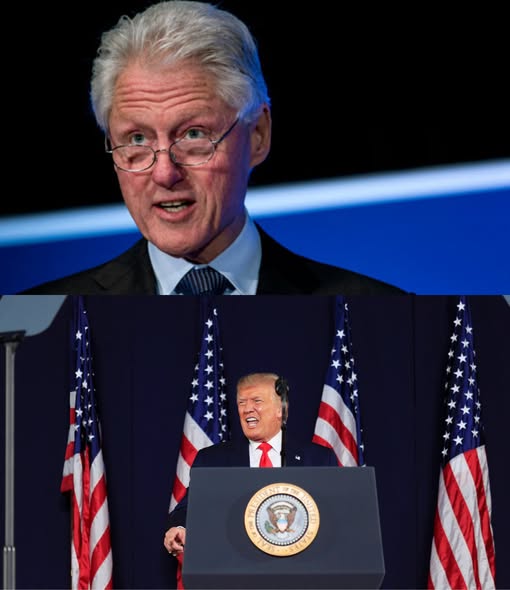
On the historic Independence Day celebration at Mount Rushmore, former President Donald Trump delivered a fiery speech warning of a looming “resurgence of the communist menace” threatening America. Using the nation’s 250th birthday as a backdrop, Trump painted a stark picture of what he sees as growing radicalism, even invoking the imagery of communism to rally his supporters.
However, the very next morning, in a stark contrast, former President Bill Clinton issued a pointed rebuke that echoed the frustrations many Americans are feeling about economic inequality and government misconduct. Unlike his usual civics reminders, Clinton’s message was direct and personal, accusing the current U.S. government of serving the interests of the wealthy elite under the guise of progress.
In a lengthy social media post, the 79-year-old Democrat outlined what he calls “the truth about America today.” He described scenes of “masked agents seizing people from their homes, workplaces, and streets”—a reference to recent concerns over police raids and domestic enforcement actions. He also condemned the warmaking shifts, citing America’s unprovoked war with Iran launched without clear objectives or exit strategies, and the Supreme Court’s composition, which he says is used to silence dissent and prosecute political enemies.
“Their New Deal is socialism for the super-rich,” Clinton wrote, explicitly targeting the economic policies that have benefited corporations, billionaires, and financial elites while ordinary Americans struggle with stagnant wages and rising living costs. His critique extends to the financial bailouts and tax breaks that, in his view, perpetuate a system that favors the wealthy at the expense of the common citizen.
Clinton’s use of the term “socialism” is deliberate and provocative. Traditionally a label applied by conservatives to leftist policies such as Medicare and labor protections, Clinton expands it to encompass the vast flows of federal aid and credits directed to Wall Street and corporate America—what he describes as “socialism for the super-rich.”
This rhetoric is especially notable given Clinton’s own political history. During his presidency, he famously moved the Democratic Party toward the center—signing welfare reforms, deregulating financial markets, and declaring an end to the era of big government. Now, decades later, he appears to adopt language typically used by progressives, echoing a critique first voiced by Martin Luther King Jr. in the 1960s, who observed that the U.S. practiced “socialism for the rich and rugged individualism for the poor.”
Clinton did not directly name Trump—who, on the day before, expressed moments of praise for Clinton, calling him a “nice guy” and saying he “likes Bill.” Yet Clinton’s swipe was clear: he implied that those in charge have perpetuated a rigged system that benefits the wealthiest Americans while undermining democratic principles and civil liberties.
The exchange underscores the deep divisions roiling American politics, especially during a moment of national reflection and celebration. For all of Trump’s fiery rhetoric about external threats and ideological battles, Clinton’s response highlights the core issue for many Americans: economic inequality, government accountability, and the need for systemic reform.
Where to Learn More
- Trump Warns of ‘Communism’ at Mount Rushmore During Independence Day Speech – The New York Times
- Bill Clinton Accuses America of ‘Socialism for the Super-Rich’ as Political Divide Deepens – The Washington Post
- Analysis: The Rhetoric of Fear and Wealth in Modern U.S. Politics – BBC News
- How Trump’s Independence Day Speech Capitalized on Fear of ‘Communism’ – CNN