
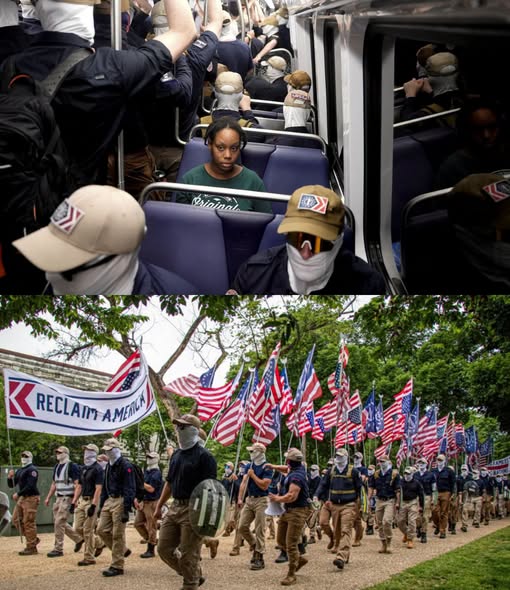
On Saturday morning, as millions of Americans celebrated the nation’s 247th birthday with fireworks, barbecues, and patriotic fervor, a disturbing scene unfolded just steps from the U.S. Capitol. A group of approximately four hundred men—clad in matching khakis, white masks, and waving Confederate flags alongside upside-down American banners—marched through Capitol Hill, chanting about expelling immigrants and asserting their disdain for the country’s diversity.
The march by what many are calling neo-Nazi extremists was a stark contrast to the festive Independence Day atmosphere. Every man was masked, concealed behind white coverings designed to depersonalize and intimidate. Their coordinated display resembled a choreographed performance, clearly staged to attract media attention. Yet, despite their menacing presence and explicit rhetoric, authorities responded with surprising passivity.
The group identified as Patriot Front is a notorious remnant of the Charlottesville neo-Nazi movement that fractured after the deadly 2017 rally where Heather Heyer was murdered. Founded by Thomas Rousseau when he was just a teenager, Patriot Front emerged from the remains of a splintered white supremacist scene, emphasizing identity politics and violent rhetoric. Their public displays are often elaborate yet ephemeral—designed for spectacle rather than substance.
These masked marchers have become known for their theatrical stunts: showing up unannounced, rallying for camera footage, inflating their perceived numbers, then dispersing into the city’s subway system or rented vehicles to avoid confrontation. Their last significant planned event in Idaho in 2022 ended with police discovering 31 members crowded in a U-Haul truck, charged with conspiracy to riot. This pattern of fleeting appearances underscores their method of “shock and hide.”
What is most alarming about Saturday’s display is the response—or lack thereof—by federal and local authorities. When a reporter asked a National Guard soldier about the identity of the masked group, the response was a dismissive, one-word answer: “protesters.”
Meanwhile, just days earlier, Capitol Police swiftly detained an Air Force major on the Capitol steps for calling for President Trump’s impeachment—within minutes. But these overtly violent, racially charged masked men, chanting racist slogans and waving flags of rebellion, were allowed to march freely without interference. No arrests were made at the scene.
Instead of facing justice, the individuals behind the masks quickly dispersed into the city’s transit system, leaving behind the solemn celebration of American independence. By the time evening arrived, the Mall was filled with Americans of every race and background, enjoying fireworks and commemorating their shared history—unaware that these symbols of hate had been so brazen just hours before.
Their fleeting appearance on Independence Day exemplifies a grim reality: even as hate groups attempt to showcase their presence to reclaim a “nation” they claim to own, the official response often signals indifference or complicity. Their act—masked, anonymous, and fleeting—is a clear warning that these extremists remain unchallenged, their messages of division rooted in fear and bigotry, far from the inclusive ideals many Americans hold dear.
Where to Learn More
- White supremacist march near Capitol sparks criticism – NBC News
- Capitol police respond cautiously to masked extremist march – The Washington Post
- Analysis: The resurgence of organized hate groups in the U.S. – BBC News
- Patterns of extremism: Patriot Front and coordinated protests – SPLC HateWatch