
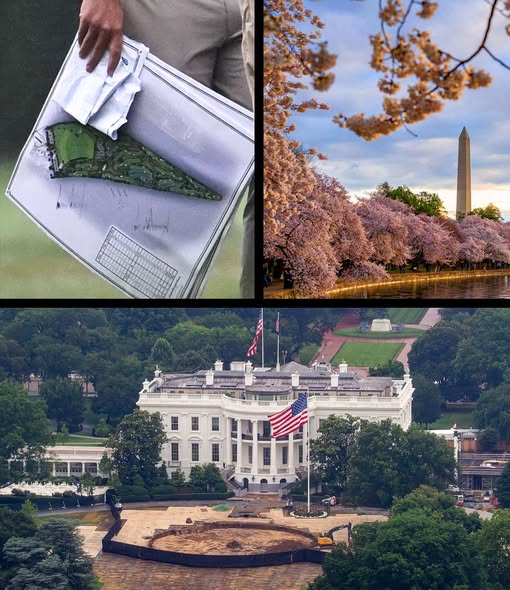
In an escalating wave of controversial developments, former President Donald Trump is once again stirring public outrage as reports emerge of plans to drastically alter some of Washington D.C.’s most treasured sites. New photos from his recent site visits reveal sweeping proposals to reshape East Potomac Park’s historic golf course and its iconic cherry blossom grove, gifts from Japan bestowed upon the city over a century ago, in 1910.
According to leaked planning documents, nearly the entire East Potomac Park peninsula is set to be excavated for a state-of-the-art, championship-level golf course. The proposed redesign would obliterate the riverside bike trail, the beloved mini golf course, and the storied cherry blossom grove—a living monument to international friendship that has been a scenic backdrop for generations of visitors. The new facilities aim to position Washington as a prime host for major sporting events like the Ryder Cup, but critics argue that this comes at an unacceptable cost to the city’s historic and environmental fabric.
This controversial project arrives just days after Trump’s unprecedented decision to demolish a substantial portion of the East Wing of the White House—a move widely condemned as a reckless wipeout of a vital part of American presidential history. The remaining 90,000 square feet of the wing have been replaced by a lavish $300 million ballroom purportedly designed for hosting diplomatic and elite events. Critics contend that the move was rushed through with minimal oversight or public input, fueling fears that Trump is prioritizing personal vanity over the nation’s heritage.
The destruction continues at the White House grounds. The South Lawn remains scarred from the makeshift UFC fight Trump hosted for his 80th birthday, which tore up the grass turf. Now, confidential sources report crews are digging into the same lawn to install an unannounced helipad—an addition long avoided by past presidents who valued the historic aesthetic of the White House grounds. The iconic Rose Garden has also been paved over or altered, feeding speculation that the president is treating these historic sites as personal projects rather than protected public assets.
None of these landmarks—whether the White House, the National Mall, or East Potomac Park—belong to any individual but are national treasures entrusted to the American people. The cherry blossom grove, a symbol of international diplomacy, is now subject to pending lawsuits and judicial scrutiny, but so far, legal efforts have failed to halt the construction plans entirely. Critics worry that the ongoing demolitions illustrate a disturbing pattern: the erosion of the public trust in favor of personal vanity projects that seem to diminish the nation’s shared history.
As public outrage mounts, questions linger about accountability. Who has the authority—or the resolve—to stand up to such sweeping transformations? With legal battles ongoing and no definitive blocks in place, many Americans are questioning whether the preservation of their history continues to be a priority or if it’s being sacrificed at the altar of personal agendas.
Where to Learn More
- Trump’s White House Renovations Spark Controversy – The Washington Post
- Controversial Plans for East Potomac Park Revealed – NPR
- White House Grounds and the Fight Over Its Historic Preservation – National Geographic
- Legal Challenges Over White House East Wing Demolition – The Hill