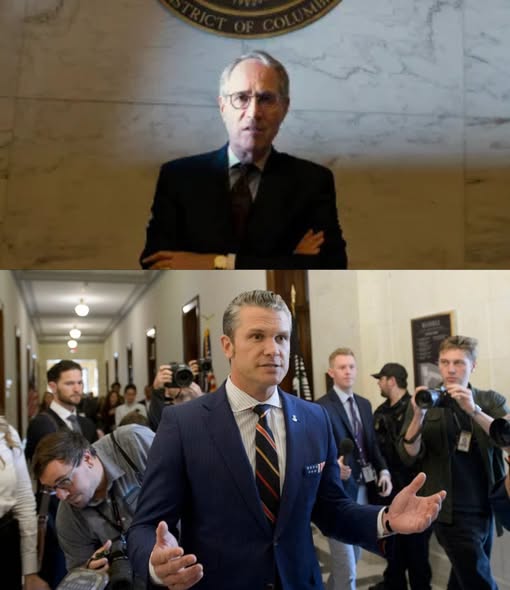
In a striking legal rebuke to the Pentagon’s latest attempt to control press access, U.S. District Judge Paul Friedman issued an injunction halting enforcement of new restrictions that required reporters inside the Pentagon to be accompanied by government escorts at all times. The ruling, detailed in a comprehensive 35-page decision, underscores a clear stance: the Biden administration’s efforts to limit journalists’ freedom inside one of America’s most secure military sites are unwarranted and incompatible with First Amendment protections.
The controversy centered around a series of policies enacted by the Pentagon, which aimed to curb what they perceived as disruptive or potentially sensitive reporting. But the judge, citing evidence of official hostility toward the press, saw through the administration’s rationale. “The notion that reporters should be treated worse than baristas, short order cooks, dry cleaners, or any other civilians given access to the Pentagon,” Friedman wrote, “surely is a perverse reading of the First Amendment.”
The decision was heavily influenced by the words and attitudes expressed by Pentagon officials, particularly Defense Secretary Pete Hegseth. Friedman pointed to Hegseth’s previous insults aimed at journalists, including referring to the press as an “endless stream of garbage” and dismissing the “legacy Trump-hating press.” The judge highlighted these comments as evidence that the restrictive policies were retaliatory rather than security-driven.
Defense Department advocates argued that the new rules were necessary to prevent leaks of classified information, citing concerns over reporters wandering into sensitive areas or stumbling upon secrets. However, Friedman dismantled this rationale methodically, observing that civilians working in amenities across the Pentagon—such as dry cleaners, coffee shops, and food counters—move freely through the building daily without escorts. “So why would the timing of a reporter’s question,” the judge questioned, “make an official more likely to divulge classified information? Is the implication that a Department official is more likely to share secrets while in line at Starbucks?”
Friedman’s definitive line was a reaffirmation of First Amendment principles: “The idea that reporters should be treated worse than civilians with unrestricted access to the Pentagon—like baristas or dry cleaners—is a perverse and unconstitutional reading of free press rights.” This ruling marks the third time the administration’s press restrictions have been struck down by Friedman. The initial attempt in March was blocked; when the Pentagon rewrote the rules to circumvent the ruling, Friedman rejected the new version in April. Despite a temporary reprieve following an appeal, Hegseth’s new restrictions have now been definitively overturned.
Throughout the legal process, Hegseth’s repeated attempts to defend or modify his policies were met with pointed references by Friedman to the offensive language and attitudes expressed by the Pentagon leadership. Each insult hurled at the press was, in effect, a sentence added to the court’s rebuke—a reminder that in the courtroom, words matter.
This case serves as a reminder that the loudest voices or the most aggressive posturing often reveal vulnerabilities. In this instance, the administration found its own words undermining its case, exposing it to constitutional scrutiny. As Friedman’s ruling makes clear, government agencies cannot silence or restrict the press under the guise of security when those actions are rooted in hostility to free speech.