
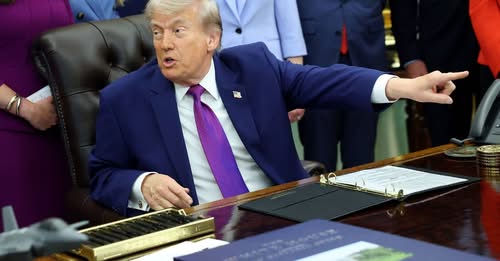
In a shocking turn of recent political discourse, former President Donald Trump has stirred international controversy with a provocative statement suggesting he is “seriously considering” the possibility of making Venezuela the 51st U.S. state. The comment, delivered during a recent rally, has ignited a firestorm of criticism and concern among global leaders, analysts, and human rights advocates alike.
During the rally, Trump declared, “Venezuela has so much oil. I’m seriously considering making it the 51st state. We could take their resources, and it would be fantastic for America.” This offhand remark echoes long-standing accusations and speculation about the former president’s ambitions and priorities, particularly regarding Venezuela’s vast oil reserves—a resource he has publicly expressed interest in controlling.
Many experts and political commentators interpret Trump’s statement as a provocative assertion of economic and geopolitical dominance. Some see it as an alarming suggestion of imperialistic tendencies, reminiscent of colonial ambitions. “His true priority, ahead of absolutely everything else, is to go down in history in big letters,” said one seasoned journalist, underscoring fears that such rhetoric signals a disregard for international norms and sovereignty.
The comment has drawn widespread condemnation from neighboring Latin American countries, many of which have historically opposed external interference. Venezuela’s government swiftly condemned the remarks, calling them “an aggressive and baseless threat” that undermines regional stability. International leaders have expressed concern that such statements could escalate tensions or inspire reckless actions.
Moreover, these remarks come amid ongoing allegations that the United States, under previous administrations, engaged in covert operations aimed at seizing Venezuelan oil assets, often accused of exploiting political turmoil within the country. Critics argue that Trump’s boast about “stealing” oil—made during the same speech—reinforces fears of renewed aggressive interventions under a different guise.
Many analysts are concerned that such rhetoric could embolden hardline factions within Venezuela, potentially leading to increased instability. Human rights groups warn that any military or political moves to incorporate Venezuela into the U.S. would have profound repercussions for regional peace, sovereignty, and the lives of its citizens.
As the political world grapples with the implications of Trump’s remarks, experts emphasize the importance of diplomacy and adherence to international laws. The idea of annexing a sovereign nation is widely considered both legally and ethically unacceptable by the global community. Still, Trump’s provocative statements highlight ongoing tensions over resource control, sovereignty, and the legacy leaders seek to leave behind.
At a time when geopolitical flashpoints are already heightened, Trump’s comments seem to add fuel to a volatile situation, raising urgent questions about future U.S. foreign policy and the boundaries of political rhetoric.