
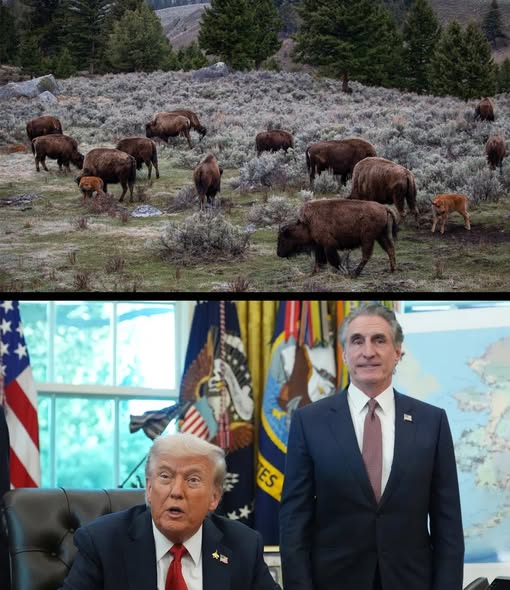
The Trump administration has taken a controversial step that has outraged conservationists, Native American communities, and environmental advocates alike. Officials from the Bureau of Land Management (BLM), under the leadership of Interior Secretary Doug Burgum, have moved to revoke grazing permits that supported conservation efforts and now intend to hand over the same federal grasslands—land that bison have roamed for thousands of years—back to cattle ranchers.
Earlier this year, the BLM approved permits for the nonprofit organization American Prairie, which has spent over two decades restoring bison to approximately 63,500 acres of public land in northern Montana. These permits, initially granted in 2022 after comprehensive environmental reviews, symbolized a significant victory for conservation efforts and Native American tribes who see the bison as a vital part of their culture and food systems. However, just months later, the administration reversed course, citing a newly invented legal interpretation that strips bison of “livestock” status.
This shift, driven largely by political pressure from Montana’s Republican Governor Greg Gianforte and the cattle industry, undermines years of progress. The BLM claims that the permits no longer apply because bison don’t qualify as livestock under the law, emphasizing a questionable legal interpretation centered on a vague term—“production-oriented purposes”—which does not explicitly appear in the legislation. Critics argue that this redefinition is a blatant attempt to prioritize cattle grazing interests over wildlife conservation and Indigenous rights.
The ramifications extend far beyond environmental policy. The opposition includes the Coalition of Large Tribes, representing over 50 Native nations and more than half of the Native American population in the U.S. These tribes manage around 25,000 buffalo and have plans to expand their herds onto federal lands as part of efforts to restore their cultural heritage and sovereignty. For Indigenous communities, the buffalo is much more than a resource; it’s a sacred symbol, a cornerstone of their identity, and a vital source of food. The Cheyenne River Sioux Tribe alone currently feeds between 2,000 and 3,000 tribal members monthly through its buffalo herd.
What makes this move particularly disturbing is its deep ethical and cultural implications. Bison have historically been decimated through policies of genocide aimed at eradicating Native peoples’ way of life. For many tribes, restoring buffalo herds isn’t just ecological; it’s a form of resilience and reclamation of their ancestral roots.
Adding to the controversy is the involvement of Karen Budd-Falen, a prominent Interior Department official with a history of representing cattle producers in legal battles over land use policies. She was granted a waiver that allowed her to influence the very policy she previously opposed, raising serious questions about ethics and conflicts of interest. Critics contend that this move exemplifies the broader pattern of undermining environmental protections in favor of industry interests under the current administration.
This latest development is part of a broader trend during the Trump era of rolling back environmental safeguards—shrinking national monuments, loosening water protections, and prioritizing resource extraction on public lands. Critics argue that these policies jeopardize the health of ecosystems, threaten Indigenous sovereignty, and diminish the natural heritage that has taken generations to preserve.
As conservationists and Native tribes continue to oppose these changes, many wonder whether this rollback is just a symptom of a larger agenda aimed at prioritizing industrial interests over the protection of America’s natural and cultural treasures.
Where to Learn More
- Bison Restoration in Montana Faces Threat from New Land Policies – National Geographic
- Native Tribes Fight to Keep Bison on Public Lands – The New York Times
- Trump’s Latest Land Grab: From Bison to Cattle – EcoWatch
- Indigenous Land and Bison Restoration in the U.S. – High Country News