
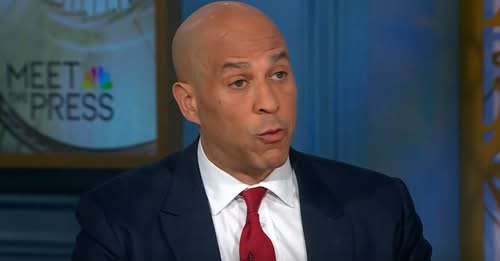
In a bold and fiery speech that has ignited social media and political discourse, Senator Cory Booker (D-NJ) publicly accused the current Supreme Court majority of corruption, demanding sweeping reforms should Democrats regain control of Congress and the presidency.
Addressing a packed crowd at a recent rally, Booker expressed deep dissatisfaction with the recent trajectory of the Supreme Court, which has made landmark rulings on issues ranging from reproductive rights to voting laws. “This court has abandoned its integrity and become a political tool,” Booker declared. “The majority’s decisions seem driven not by the law, but by bias and perhaps worse—corruption.”
The senator’s remarks come amid ongoing criticism of the high court’s conservative majority, which has shifted the judiciary sharply to the right since former President Donald Trump’s appointments. Critics argue that this shift has undermined decades of precedent and eroded public trust in the judiciary as an impartial institution.
Booker did not mince words. He called for a significant overhaul of the court, proposing reforms such as increasing the number of justices, implementing stricter ethical standards, and establishing more transparent appointment processes. “Once Democrats hold the levers of power again, we must act decisively,” he said. “Judicial reform is essential to restoring faith in our institutions and ensuring justice for all Americans.”
This rhetoric marks a notable shift in tone, emphasizing congressional activism in judicial reform, a topic that has gained renewed urgency amid the court’s recent controversial rulings. While some legal scholars worry that such proposals could undermine the independence of the judiciary, many progressive voices echo Booker’s call for a reexamination of the court’s structure and ethics standards.
In response, critics from the right have dismissed Booker’s accusations as hyperbole or politically motivated. Senate Republicans have argued that the court’s decisions reflect the separation of powers and judicial independence, dismissing claims of corruption as unfounded. Nevertheless, the debate underscores a growing polarization over the role of the judiciary in American democracy.
As midterm elections approach and Democrats consider defending or expanding their majorities, discussions about court reform are likely to intensify. Political analysts suggest that if Democrats manage to regain control, pushing through reforms could become a key legislative agenda—though whether such efforts will withstand judicial and political pushback remains uncertain.
The conversation ignited by Senator Booker has spotlighted longstanding concerns about the integrity and influence of the Supreme Court. As the nation watches, the call for reform echoes a broader demand for accountability and transparency within America’s highest judicial body.
Where to Learn More
- Cory Booker Calls Supreme Court Majority ‘Corrupt,’ Pushes for Reform – The New York Times
- Senator Booker Urges Judicial Reform After Court Decisions – The Washington Post
- Sen. Cory Booker: ‘The Court Has Abandoned Its Integrity’ – NPR
- Cory Booker Calls for Court Reforms, Labels Majority as ‘Corrupt’ – CNN