
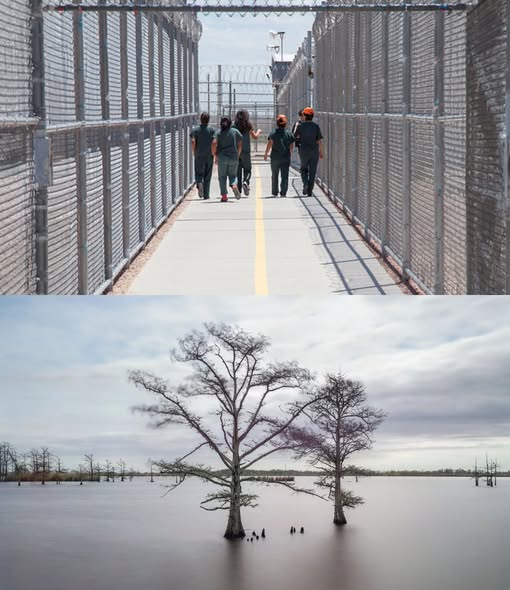
In a development raising serious public health and environmental concerns, reports have emerged that the Trump administration is planning to establish detention facilities for migrant children on some of the most chemically contaminated land in the United States.
The Guardian revealed that the Immigration and Customs Enforcement (ICE) agency is proposing a family detention center at England Airpark in Louisiana—a site infamous for its extreme groundwater contamination. Tests have shown levels of PFAS — commonly known as *forever chemicals* — reaching a staggering 41 million parts per trillion. To put this into perspective, the federal legal limit for safe drinking water is between 4 and 10 parts per trillion. This means the contamination at the England Airpark site is at least 575,000 times higher than the maximum safe level.
PFAS chemicals are persistent pollutants that do not break down in the environment or the human body. They are linked to a range of serious health issues, including kidney and testicular cancer, thyroid disorders, and immune system damage—particularly in children, who are especially vulnerable to these toxins. Scientific experts warn that exposure to such high levels of PFAS poses immediate and long-term health risks to anyone living or working on these sites.
The situation is not unique to Louisiana. In Arizona, Attorney General Kris Mayes filed a lawsuit last Friday to block plans for a separate ICE detention center in the city of Surprise. This $70 million facility is set to be built directly across from a hazardous chemical storage site used in semiconductor manufacturing, which contains thousands of gallons of toxic materials. Alarmingly, the federal government has allocated over $300 million to retrofit and expand this site to hold up to 1,500 detainees, despite having skipped environmental reviews or safety assessments beforehand.
Further south, in New Hampshire, a proposed ICE facility in Merrimack sits within a 65-square-mile zone contaminated with PFAS, with private wells testing well above safety limits. In Texas, the Karnes County detention center is located just 100 feet from active oil wells and gas flares, raising concerns about residents’ exposure to hazardous emissions. And in Tacoma, a detention center is situated near a Superfund cleanup site, exemplifying a troubling pattern of placing vulnerable populations in environmentally compromised areas.
The truth is glaring: this administration appears to be intentionally selecting sites with known environmental hazards to establish detention centers, despite the well-documented health risks. With over $45 billion allocated last July for detention expansion, and minimal oversight or environmental scrutiny, critics argue that safety is being sacrificed for political and logistical convenience. These camps are being built in areas where they would never be appropriate for schools or residential neighborhoods, raising urgent ethical and public health questions.
As concern grows among environmentalists, health advocates, and the affected communities, the pattern underscores a troubling willingness by the federal government to prioritize detention capacity over the safety of children and the environment. The decision to locate detention facilities on toxic lands appears reckless, and the consequences could be dire for generations to come.