
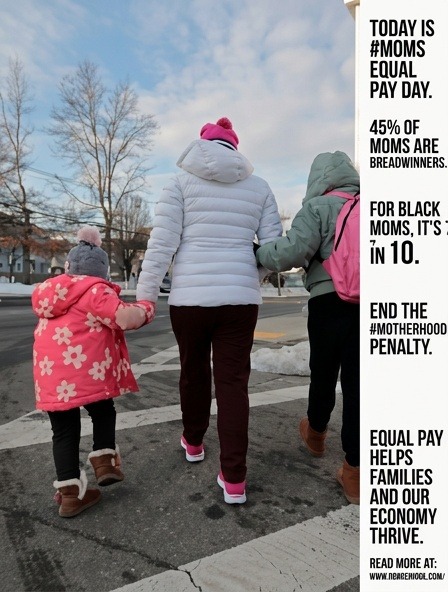
Today marks #MomsEqualPayDay, an important reminder of the ongoing wage and employment disparities faced by working mothers across the country. Despite the fact that **45% of moms are now the primary breadwinners for their families**, many confront significant barriers rooted in the longstanding #MotherhoodPenalty—a societal and employer bias that penalizes women for taking on motherhood responsibilities.
This wage gap is more than an individual issue; it has sweeping implications for families and the economy as a whole. When mothers earn less, their families often struggle to meet financial needs, impacting everything from healthcare to education. Moreover, these disparities hinder broader economic growth. **Closing the gender wage gap, especially for moms, is crucial for fostering economic stability and ensuring all families have the opportunity to thrive**.
One particularly alarming statistic highlights the disproportionate impact on Black moms. Data reveals that **7 in 10 Black mothers are the primary breadwinners** in their households — a testament to the resilience of Black women who often shoulder the financial burden of their families. However, they also face steeper wage gaps and employment obstacles due to both gender and racial biases, reinforcing the urgent need for targeted policy reforms and employer accountability.
Experts argue that addressing the #MotherhoodPenalty requires comprehensive action, including transparent pay practices, paid family leave, flexible work arrangements, and robust anti-discrimination policies. “Equal pay isn’t just a moral imperative—it’s essential for economic growth,” says Dr. Lisa Johnson, a labor economist. “Ensuring that mothers, especially Black mothers, receive fair compensation benefits everyone by boosting household stability and consumer spending.”
Advocates are calling for businesses, policymakers, and communities to work together to dismantle systemic barriers. Initiatives like pay transparency laws and expanded childcare support are vital steps toward equity. As the nation observes #MomsEqualPayDay, it’s clear that achieving wage fairness for moms isn’t just a women’s issue; it’s a family and economic issue that impacts us all.
Supporting working mothers by closing the wage gap means investing in families’ futures and fostering a more inclusive, resilient economy. The time for action is now—because when moms succeed, everyone benefits.