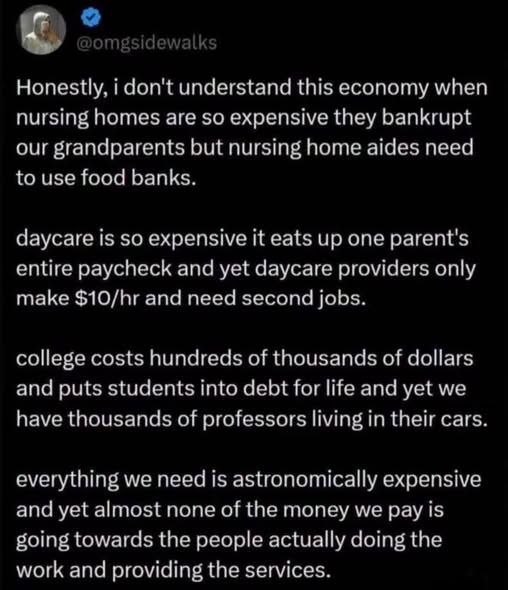
In a country that prides itself on compassion and progress, a stark paradox is unfolding. While the cost of nursing homes skyrockets—making it nearly impossible for many families to afford proper elder care—those who work tirelessly within these facilities are often forced to rely on food banks to survive. Meanwhile, the cost of daycare remains a persistent obstacle for working parents, highlighting a deeper, systemic failure in American economic priorities.
This troubling situation was summed up concisely in a social media post that captured widespread outrage: “Honestly, don’t understand this economy when nursing homes are so expensive they bankrupt our grandparents but nursing home aides need to use food banks. Daycare is…” It’s a blunt reminder that the economic model currently in place is failing both the most vulnerable and the essential workers who support them.
For seniors and their families, the financial burden of elder care has become almost insurmountable. According to the latest figures from the Genworth Cost of Care Survey, the average annual cost of a private nursing home room now exceeds $105,000 nationwide. In some regions, prices surpass $150,000—a sum that most retirees simply cannot afford without depleting their life savings. For many, this means facing tough decisions: downsize, borrow, or risk declining quality of care.
Meanwhile, those tasked with providing care—licensed aides, nurses, and staff—are often paid wages so low they find themselves relying on food banks. A 2023 New York Times investigation highlighted the financial struggles of these vital workers, revealing that many earn below the federal poverty line, forcing some to choose between working and food insecurity.
This dire juxtaposition exposes a fundamental flaw in our economic system: it values profits and cost-cutting over human dignity and support. As the cost of elder care rises, the workforce remains underpaid and undervalued. The result? A cycle where those in need pay the ultimate price, and their caregivers are pushed to the brink.
The struggles extend beyond elder care. Childcare costs have also skyrocketed, often exceeding rent for some families. According to the U.S. Census Bureau, the median annual cost of full-time toddler care exceeds $10,000. For many families, this is an unmanageable expense that forces difficult choices—cuts in work hours, reliance on family members, or even forgoing employment altogether.
This pattern of economic stress and inequality underscores the urgent need for systemic reform. Policy proposals like increased funding for elder care, higher wages for care workers, and subsidized childcare programs could be steps toward a more equitable system. But until then, the harsh reality remains: our most vulnerable populations and the workers who serve them continue to bear the brunt of economic neglect.
As social media users continue to share and amplify messages like the viral post, public awareness grows. It’s a call to action for policymakers, communities, and individuals alike to prioritize dignity, affordability, and support for those who need it most. Because ultimately, caring for our elders and children isn’t just a moral duty—it’s a measure of our nation’s humanity.
Where to Learn More
- Genworth Cost of Care Survey – Genworth Financial
- Nursing Home Workers Rely on Food Banks Amid Low Wages – The New York Times
- Child Care Costs Are Overwhelming American Families – U.S. Census Bureau
- The Economic Challenges Facing Long-Term Care – Health Affairs
- AARP: How Rising Elder Care Costs Impact America’s Seniors