
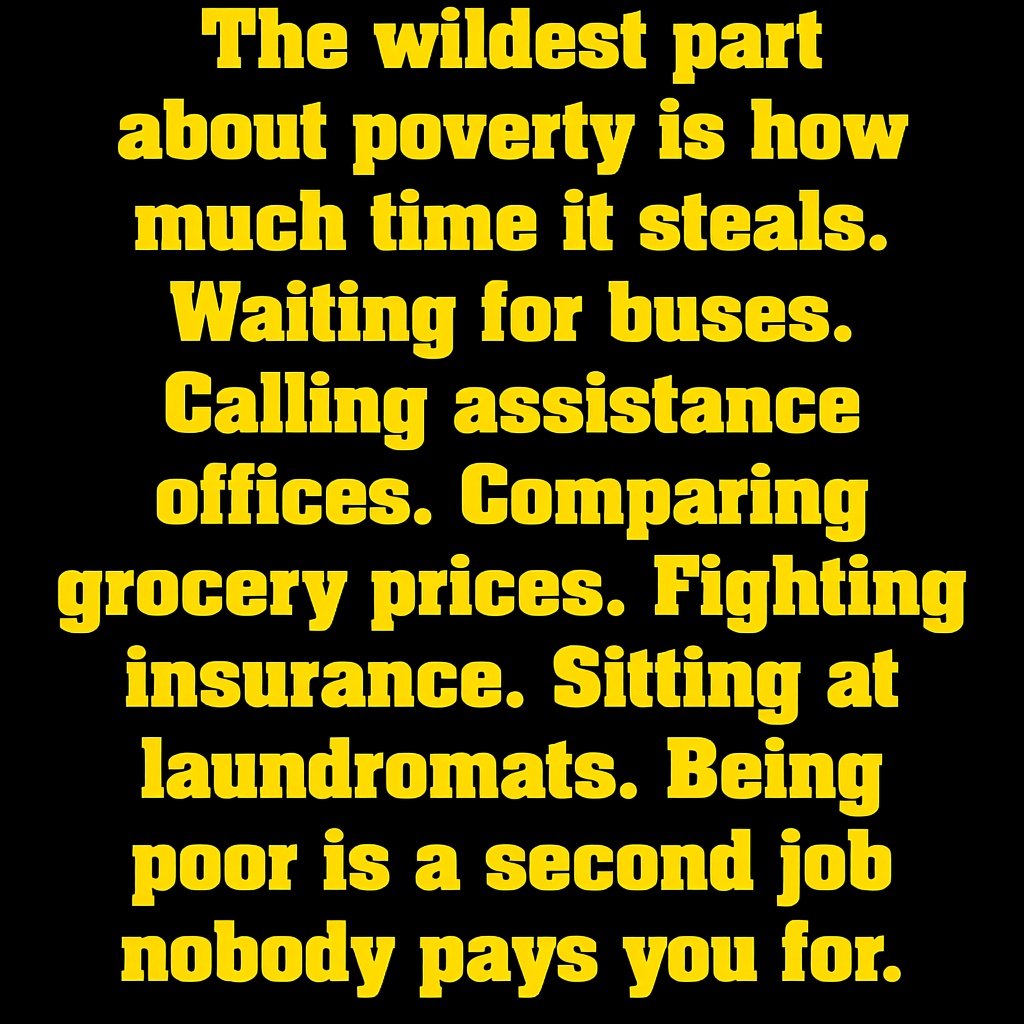
Across communities nationwide, a silent battle rages—one that often goes unnoticed yet profoundly impacts millions. Poverty isn’t just about financial hardship; it relentlessly consumes time and energy that could otherwise be spent on personal growth, family, or simple leisure. An increasingly shared social media post captures this reality poignantly with a simple but powerful message: “The wildest part about poverty is how much time it steals. Waiting for buses. Calling assistance offices. Comparing grocery prices. Fighting insurance. Sitting at lines.”
This statement resonates because it highlights a fundamental truth: poverty isn’t solely characterized by a lack of money but by the crushing burden of administrative hurdles, unreliable transportation, and the constant battle to access basic services. These daily inconveniences, often dismissed as minor inconveniences, accumulate into significant losses of time and mental well-being—losses that can stagnate people’s lives and perpetuate cycles of hardship.
Consider the scenario of waiting for unreliable buses or navigating complicated assistance programs. For many living paycheck to paycheck, each minute spent in line or on hold means fewer moments with loved ones, less time advancing in education or career, and diminished chances to improve their circumstances. The process of calling social service offices, grappling with confusing eligibility requirements, and fighting insurance companies creates a bureaucratic maze that many find exhausting and discouraging.
Moreover, this struggle extends to everyday tasks like grocery shopping. Comparing prices at different stores or hunting for affordable options can take hours—time that could be used more productively or enjoyed with family. It’s a relentless cycle that highlights the systemic inequalities baked into our social support systems and infrastructure.
Experts argue that this “time theft” has far-reaching consequences. Beyond immediate frustrations, it can erode mental health, reduce economic mobility, and foster feelings of helplessness. As poverty persists, so does the sense that the system is designed to keep vulnerable populations in a never-ending loop of struggle.
What can be done? Advocacy groups emphasize the need for systemic reforms—streamlining social services, expanding transportation options, and investing in technologies that make accessing aid easier and more efficient. Addressing these issues isn’t just about monetary relief; it’s about reclaiming valuable time and dignity for those who need it most.
Ultimately, recognizing that poverty’s greatest toll extends beyond dollars is a vital step toward creating an equitable society. Every minute spent in lines or on hold is a minute that could be spent building a better future. Addressing these hidden burdens requires empathy, innovation, and political will—so that no one has to trade their precious time just to survive.
Where to Learn More
- Time Poverty and Inequality: The Hidden Cost of Poverty – Urban Institute
- Poverty as a Systemic Time Robber – Nation of Change
- Time Use and Poverty: Connecting Daily Struggles to Systemic Change – Child Trends
- The Psychological Impact of Bureaucratic Hurdles – Brookings Institution