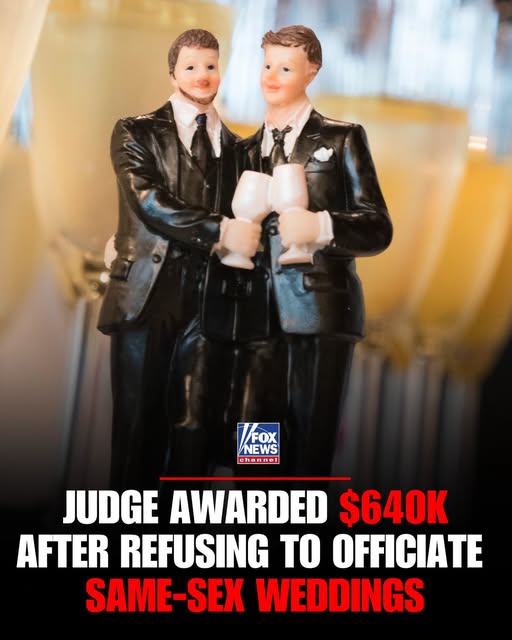
A Texas judge has secured a significant legal victory, receiving more than $640,000 in damages after she was disciplined for refusing to officiate same-sex weddings due to her religious beliefs. The ruling underscores the ongoing tension between religious liberty and public duty, igniting a nationwide debate on the rights of faith-based professionals.
The case centers around Judge Cindy Olson, a seasoned judicial officer who faced disciplinary action after declining to preside over same-sex marriage ceremonies. Olson, publicly vocal about her Christian faith, argued that participating in such ceremonies would conflict with her religious convictions. According to court documents, she expressed her stance quite clearly: “It’s important for people of faith to be able to decline to participate in things that they find are incompatible with their religious faith.”
The tribunal’s decision to discipline Olson sparked backlash from advocates for LGBTQ+ rights and legal experts who viewed the ruling as an infringement on the rights of same-sex couples to equal access to wedding services. However, the court ultimately sided with Olson, ruling that her religious rights were violated and awarding her damages for emotional distress and loss of reputation.
This landmark case marks a major milestone in the ongoing debate over religious liberty in the United States. It raises critical questions: Should public officials be exempt from duties that conflict with their religious beliefs? And to what extent can religious convictions protect individuals from professional repercussions?
Legal analysts note that this decision could set a precedent for other cases where personal faith clashes with public responsibilities. Critics, meanwhile, warn that such rulings might open the door to discrimination under the guise of religious freedom. The case has already garnered widespread media attention, with some calling it a victory for religious liberty—hence the social media hashtag, “It’s a great victory for people of faith.”
As the debate continues, many are watching closely to see how courts will balance individual religious rights with civil rights protections. Olson’s lawyers emphasized that her victory reaffirms her right to hold and act upon her religious beliefs without fear of punishment—a sentiment echoed in her statement, “We must protect the freedoms that allow faith to flourish, even in the public square.”
This case highlights the complex and evolving intersection of faith, law, and civil rights. It also signals a potential shift in how courts approach the rights of individuals to act according to their conscience while serving in public roles.
Where to Learn More
- Texas Judge Wins $640,000 After Religious Dispute Over Same-Sex Weddings – The New York Times
- Legal Experts Analyze Landmark Victory for Religious Freedom in Texas – The Washington Post
- FOX News Coverage on Judge Olson’s Case and Its Significance
- Human Rights Watch: The Debate Over Religious Freedom and Civil Rights