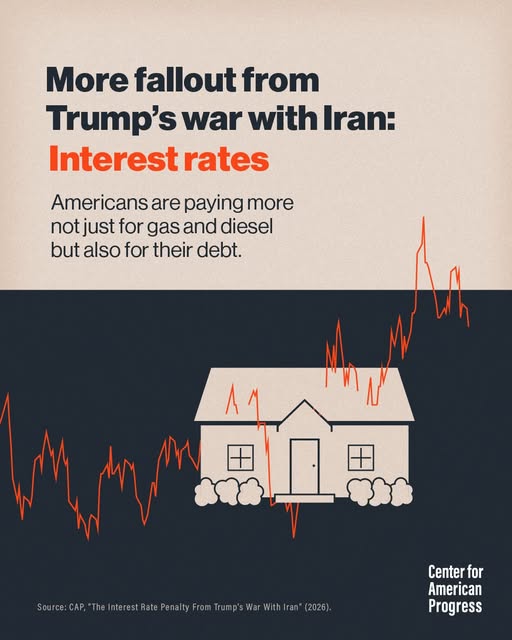
The ripple effects of former President Donald Trump’s aggressive approach toward Iran continue to reverberate through the U.S. economy, impacting households and businesses in ways many Americans might not immediately recognize. A recent graphic from the Center for American Progress highlights a concerning trend: the financial fallout from that controversial foreign policy stance is now manifesting in higher interest rates, which directly affect everyday Americans.
During Trump’s tenure, increased tensions with Iran escalated into military confrontations and strict economic sanctions. While intended to weaken Iran’s influence and deter aggression, these actions have inadvertently contributed to instability in global markets. Now, economists warn that this geopolitical instability is fueling ongoing economic consequences, with ordinary Americans paying the price.
Specifically, the graphic titled “More fallout from Trump’s war with Iran: Interest rates” illustrates how these policies have led to a rise in interest rates across the board. For families, this means higher mortgage payments, elevated credit card interest, and increased borrowing costs. For small businesses, the cost of expansion, reinvestment, and daily operations has become steeper, hindering economic growth at the grassroots level.
Expert analyses suggest that the increase in interest rates is intertwined with global uncertainty caused by ongoing tensions in the Middle East. Investors often seek safer assets during times of geopolitical turmoil, driving up bond yields and, consequently, interest rates. While this might sound abstract, the tangible impact is clear: during periods of escalating conflict, it becomes more expensive for Americans to finance major purchases or grow their savings.
Economic policymakers are now grappling with the challenge of balancing national security interests against the economic stability of American households. Many critics argue that Trump’s aggressive foreign policy strategy created avoidable economic volatility, which is now surfacing as higher borrowing costs at home. This situation underscores how foreign policy decisions can have profound domestic consequences—often affecting the most vulnerable who rely on affordable credit and stable economic conditions.
Ultimately, the current interest rate environment reveals a sobering truth: the costs of certain foreign policy choices are not limited to distant conflict zones, but are felt in local supermarkets, neighborhoods, and workplaces. As the nation continues to recover from global economic shocks, understanding this interconnectedness becomes vital for voters, policymakers, and business leaders alike.
Where to Learn More
- More fallout from Trump’s war with Iran: Interest rates – Center for American Progress
- How Middle East Tensions Are Affecting American Interest Rates – Economics Daily
- The economic cost of the Iran conflict and rising interest rates – CNN
- Interest Rate Hikes and Middle East Tensions: What’s Next? – Bloomberg