The Supreme Court has once again become the focal point in the ongoing battle over the future of American citizenship, delivering a 6-3 decision that, on the surface, appears to protect the longstanding principle of birthright citizenship. However, beneath this apparent majority, the margins and judicial reasoning reveal a far more precarious and alarming landscape.
Chief Justice John Roberts authored an opinion emphasizing that citizenship is “the right to have rights” and affirming that the government’s promise to uphold this right remains intact. “We keep that promise today,” Roberts declared, signaling a reaffirmation of the constitutional guarantee rooted in the 14th Amendment, which has been settled law since 1898. However, what truly stands out from the ruling is the divided core of the court’s reasoning.
Only one justice, Amy Coney Barrett, explicitly agreed with Roberts that President Trump’s order violated the Constitution. Meanwhile, other members of the majority—Justice Kavanaugh, for example—joined the outcome but expressed doubt that the order breached the 14th Amendment, instead framing it as a matter of federal statutes. This nuanced position underscores that the actual constitutional boundary was much thinner than the 6-3 split suggests.
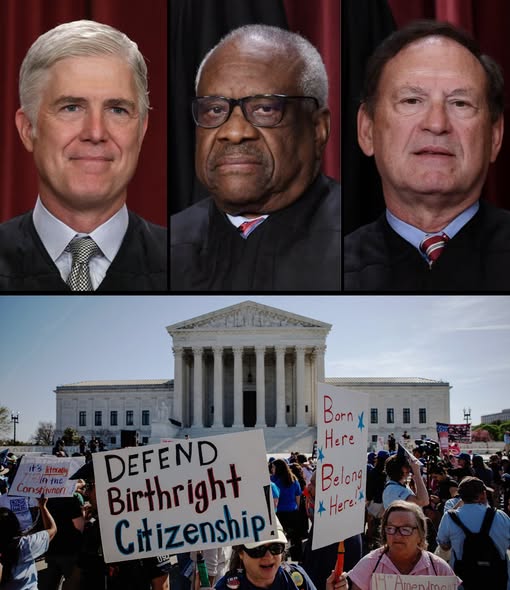
The dissenting voices, led by Justice Clarence Thomas and Justice Neil Gorsuch, took a starkly different stance. Thomas, joined by Gorsuch, authored a 91-page dissent accusing the majority of relying on “not historically accurate” reasoning, and warned that the ruling risks undermining immigration enforcement. Justice Samuel Alito also penned a scathing dissent, calling the decision “a serious mistake” that could incentivize illegal immigration, effectively opening the door for future challenges to the 14th Amendment’s scope.
Alarmingly, the dissenters’ warnings aren’t merely academic. Their vigorous dissent highlights the potential for this court, especially if it shifts even further to the right, to fundamentally alter the interpretation of what it means to be an American citizen. The current five-justice conservative bloc is just one seat away from making sweeping changes to the constitutional fabric, with some court insiders warning of an attempt to “rewrite the Constitution by fiat,” effectively putting citizenship and rights up for political debate.
Adding fuel to the fire, a false alarm that Justice Samuel Alito was retiring briefly spread panic across social media, illustrating the volatile atmosphere surrounding the court. The story was quickly retracted after a reporter misheard an announcement, but it served as a stark reminder of how fragile the perception of judicial stability has become. Experts warn that if more justices step down or shift their views, we could see a seismic transformation in the country’s foundational principles, especially amid upcoming midterm elections that will influence judicial appointments.
As Americans, it’s crucial we understand that what may look like a secure victory today could be a thin margin away from profound, lasting change. The future of birthright citizenship remains precariously balanced, and the Court’s current trajectory suggests that the next big clash is only just beginning.
Where to Learn More
- NPR reports on the court decision and the false Alito retirement rumor – NPR
- Analysis of the Supreme Court’s ruling on birthright citizenship – The Washington Post
- Detailed breakdown of the judicial reasoning and dissenting opinions – SCOTUSblog
- What the ruling means for the 14th Amendment and future immigration policies – CNN