
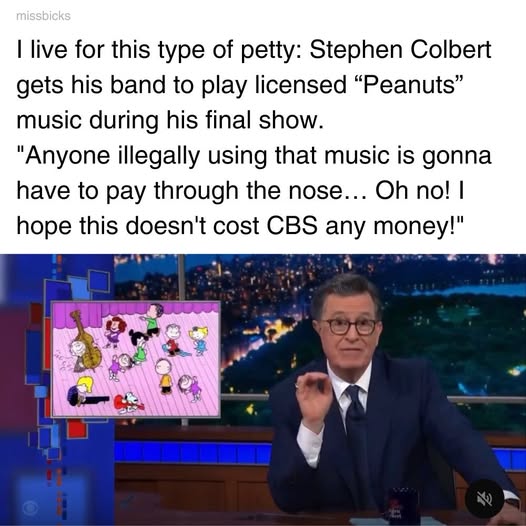
In a move that delighted fans and sparked online chatter, Stephen Colbert pulled off an unexpectedly charming stunt during his final show as host of “The Late Show.” Known for his sharp wit and penchant for playful mischief, Colbert enlisted his band to perform a nostalgic, licensed rendition of “Peanuts” music—much to the delight of viewers and social media users alike.
As the credits rolled on his farewell episode, viewers were surprised to hear the familiar, whimsical tunes from Charles Schulz’s beloved comic strip characters. But it wasn’t just a random choice—this was a deliberate, tongue-in-cheek message that had the internet buzzing: Colbert’s band played the licensed music from “Peanuts,” including the iconic “Linus and Lucy” theme, explicitly referencing the classic specials and comics that have become an integral part of American childhood.
The stunt has racked up social media buzz, with many praising Colbert’s “petty” but charming gesture. A popular Twitter post showcasing an image of the performers with the caption, “missbicks I live for this type of petty,” perfectly captures the playful spirit of the moment. Essentially, Colbert’s act was a light-hearted warning to anyone illegally using or streaming the music without proper licensing—an amusing yet pointed way to remind others of the importance of respecting copyright laws.
The context behind the move is equally clever. During the episode, Colbert made a tongue-in-cheek remark about how “anyone illegally using that music is in for a surprise,” hinting at his playful but firm stance on intellectual property rights. The choice to feature the licensed “Peanuts” music during his prestigious final show was both a nod to childhood nostalgia and a subtle reminder that music licensing matters—even in the world of late-night television staples.
Musicians, rights holders, and fans quickly weighed in, commending Colbert for blending humor with a savvy legal jab. The “Peanuts” soundtrack, composed by Vince Guaraldi, is a protected piece of cultural property with licensed rights belonging to various rights holders, making the performance a clever, legally compliant homage—albeit with a wink to the audience about the importance of respecting such rights.
Ultimately, the stunt served as a perfect send-off, combining humor, nostalgia, and a dash of petty fun that highlights Colbert’s playful personality. It also sparked broader conversations on social media about music rights, licensing, and the ways artists and creators protect their work in a digital age—reminding everyone that sometimes, a little nostalgia can be the best form of protest.