
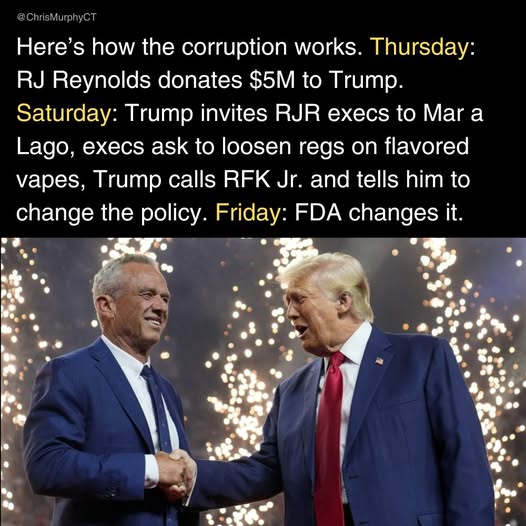
Locked behind the curtains of political power struggles and corporate influence, a startling social media revelation is shedding light on the intricate links between major corporations and government decisions. A viral post directed at @ChrisMurphyCT alleged a sequence of events that suggest a troubling pattern of corruption involving tobacco giant RJ Reynolds and former President Donald Trump.
The timeline begins this past Thursday, when RJ Reynolds, one of the largest tobacco companies, reportedly donated a staggering $5 million to support Donald Trump. Just two days later, on Saturday, Trump is said to have responded by inviting top RJ Reynolds executives to Mar-a-Lago, possibly to discuss future business interests. The social media post implies that during this meeting, the executives requested regulatory loosenings—an influence that could have significant implications for public health and policy integrity.
While these events have not been officially confirmed through public records, the pattern raises concerns about the cozy relationships between corporate money and political power. Critics argue that such donations may sway policymakers, leading to preferential treatment that benefits big corporations at the expense of the public interest.
Campaign finance records have long shown a significant flow of funds from tobacco companies to political figures, often accompanied by behind-the-scenes lobbying efforts. However, the timing and apparent directness of this transaction—large donation, high-profile invitation, and discussions of regulatory changes—expose a potential “pay-to-play” scheme that undermines democratic processes.
Experts warn that such influence compromises the integrity of policy decisions, especially on issues vital to public health. Critics emphasize that loosening regulations on tobacco could lead to increased consumption, higher healthcare costs, and a greater burden on the healthcare system, all while benefiting corporations financially.
This social media revelation is a call for greater transparency and accountability in the relationship between corporate donors and political leaders. As investigations into these alleged connections gain momentum, the public is reminded of the importance of safeguarding democratic processes from undue corporate influence.
Meanwhile, watchdog groups continue to push for stricter campaign finance laws and more transparent lobbying practices, aiming to ensure that policy decisions serve the people—not corporate profit margins.
Stay tuned for updates on this developing story as more information comes to light about the potential web of influence and corruption intertwined with political and corporate interests.
Where to Learn More
- The influence of tobacco lobbying on public policy – Open Records Project
- Campaign Finance Data & Influence – ProPublica
- How Big Tobacco Shapes Legislation – Citizens for Ethics and Responsibility in Washington
- Tobacco Lobby’s Hidden Influence on Politics – The New York Times
- Public health and corporate influence: The ongoing battle – BBC News