
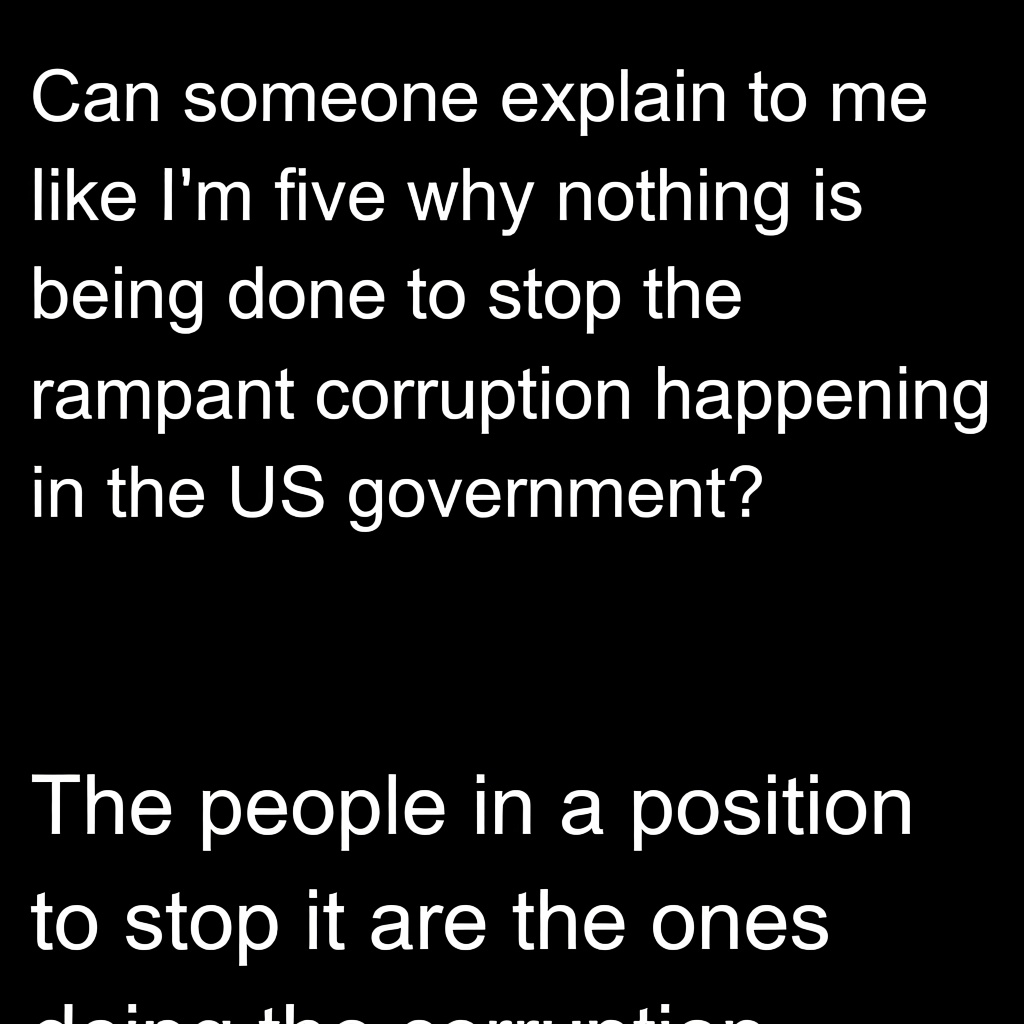
In a recent viral social media post, user zarina wetabyssmusee bluntly asked a question that resonates with many Americans: “Can someone explain to me like I’m five why nothing is being done to stop the rampant corruption happening in the US government?” The stark simplicity of the question has struck a chord, prompting widespread discussions online and sparking concerns about the ongoing issues of corruption that seem to persist despite a society that values transparency and accountability.
Corruption within the U.S. government has been a hot-button issue for decades. From allegations of influence peddling and lobbying to potential conflicts of interest among policymakers, many Americans wonder why systemic issues haven’t been addressed more effectively. Critics argue that the complex web of political finance, special interests, and interconnected power structures makes tackling corruption an uphill battle—often leaving everyday citizens feeling powerless and frustrated.
This social media question highlights a common perception: that government officials might prioritize personal or institutional gain over public interests. While some argue that the system is designed to be resistant to change, others say there’s a lack of political will to implement meaningful reforms. The widespread influence of lobbyists and corporate money is frequently cited as a barrier to addressing corruption decisively.
Experts suggest that one reason nothing substantial has been done in recent years is the entrenched power of lobbying groups that can bankroll political campaigns and sway legislation. Moreover, many see legislative reforms as slow-moving or compromised by partisan interests. Despite numerous campaign promises to fight corruption, tangible changes have often fallen short or been stymied by political gridlock.
Another facet of the issue is public awareness and media coverage. While many stories of corruption are reported, some believe that mainstream coverage often downplays or obscures the depth of the problem. This helps sustain a perception that corruption is systemic but unfixable, fueling public disillusionment.
Despite these challenges, activists and reform-minded politicians continue pushing for measures like increased transparency, stricter lobbying laws, and stronger accountability mechanisms. The question posed on social media reminds us that at the core, many Americans are seeking clarity and assurance that their government serves the public interest—not just the interests of the powerful.
As discussions around systemic reform accelerate, it remains to be seen whether momentum will translate into concrete action. Until then, the call for transparency and justice continues to echo across social platforms and city halls alike, inspiring citizens to stay engaged and demand change.
Where to Learn More
- Citizens for Reform – An organization advocating for transparency and anti-corruption measures
- ProPublica – Investigative journalism exposing political corruption and influence peddling
- Human Rights Watch – Corruption and Human Rights – Reports on how corruption impacts human rights globally and in the U.S.
- C-SPAN – Recordings of government proceedings and discussions on reforms