
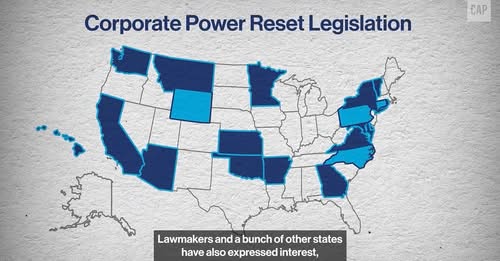
This year, a remarkable legislative trend has taken hold across the United States: more than a dozen states have filed what are being called “Corporate Power Reset” bills. These laws aim to reshape the influence of large corporations within state economies, potentially altering the balance of power between corporate giants and everyday consumers. While some see these measures as a move towards increased regulation and accountability, others perceive them as threats to business innovation and economic growth.
The surge in proposed legislation comes amidst growing public concern over corporate dominance. Critics argue that big corporations wield outsized influence over politics, labor markets, and local communities, often prioritizing profits over public interests. This has led to calls for reforms that would rein in corporate power, enhance transparency, and offer greater protections for workers and consumers alike.
According to recent reports, states like California, Massachusetts, and Illinois have filed comprehensive bills aimed at curbing corporate lobbying, increasing transparency in financial contributions, and establishing stricter regulations on corporate mergers. Other states, including Florida, Texas, and Ohio, are exploring legislation that seeks to limit corporate influence in public procurement and local policymaking.
One focal point of many proposed laws is cracking down on the phenomenon of “corporate personhood,” which has been a point of contention since the 2010 Citizens United decision. Advocates for reform believe that further legal restrictions could prevent corporations from exerting undue influence over elections and policy decisions, ensuring that political power remains closer to individual voters.
Interestingly, some of these laws aim to improve corporate responsibility rather than diminish corporate rights outright. Proponents argue that holding corporations accountable—through measures like mandatory disclosure of political spending or stricter environmental regulations—can foster a healthier economic environment and protect public welfare.
And it’s not just a national movement; local communities are increasingly engaging in debates over these bills, with citizens pushing for legislative action that aligns with their views on corporate accountability. The possibility that your state might be involved underscores the importance of staying informed on this rapidly evolving issue.
As this new wave of legislation unfolds, experts warn that the legislative landscape could shift dramatically in the coming months. Whether these bills succeed or face opposition, one thing is clear: the question of how much influence corporations should have in American society remains at the forefront of policy debates across the country.
Where to Learn More
- New State Laws Aim to Rebalance Corporate Power – The New York Times
- States Take On Corporate Influence with New Bills – The Washington Post
- Legislatives Push for Corporate Power Reset in 2023 – Reuters
- Why States Are Fighting Corporate Influence — And What It Means for You – Investopedia