
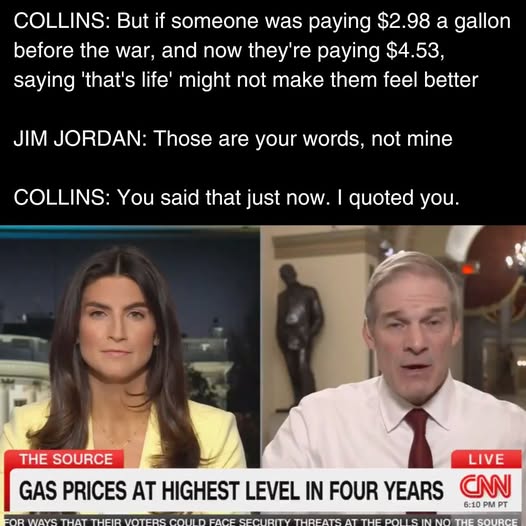
In the ongoing debate over soaring fuel costs, recent remarks from political figures have sparked a wildfire of online conversations and frustrations among everyday Americans. A social media post highlighting a stark comparison of gas prices—$2.98 per gallon before the war and $4.53 now—has resonated widely, exposing the rising cost of living and the perceived dismissiveness from some political leaders.
In the viral post, a user quoted Representative John Collins, who reportedly said, “But if someone was paying $2.98 a gallon before the war, and now they’re paying $4.53, saying ‘that’s life’ might not make them feel better.”
This succinct statement has ignited a chorus of responses criticizing what many see as an insensitive response to the financial strain felt by millions of Americans.
The recent surge in fuel prices is attributed to a complex mix of geopolitical tensions, supply chain disruptions, and domestic policy challenges. Since the outbreak of global conflicts and the resultant instability in energy markets, gasoline prices have climbed sharply, impacting everything from daily commutes to the cost of goods and services.
Republican Representative Jim Jordan echoed similar sentiments, emphasizing the frustration many are feeling. “People are hurting,” Jordan stated during a recent interview. “When you see prices double at the pump, dismissing it with a ‘that’s life’ attitude isn’t helpful — it’s dismissive.” His comments reflect a broader political debate about how leaders should respond to economic hardships and communicate with their constituents.
Economic experts warn that these rising prices could have long-term implications for economic recovery and household budgets. According to the U.S. Energy Information Administration, gasoline prices typically fluctuate due to a variety of factors, but the current spike has come at a particularly challenging time for many Americans already grappling with inflation and stagnant wages.
Meanwhile, social media continues to serve as a battleground for opinions, with many users sharing personal stories of how increased fuel costs are affecting their families, from cuts in discretionary spending to postponing travel plans. Critics argue that dismissive or indifferent rhetoric from some politicians only exacerbates public frustration, underscoring the importance of empathetic leadership during these trying times.
As debates rage on, it remains clear that addressing the root causes of rising fuel prices will require comprehensive policy solutions, including strategic domestic energy production and international diplomacy. For now, millions are left feeling the pinch, questioning whether political rhetoric truly acknowledges their daily struggles.