
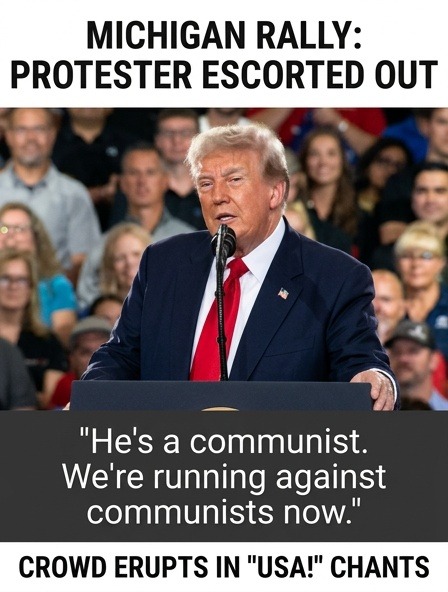
During a recent rally in Michigan, an unexpected scene unfolded that quickly grabbed national attention. As President Donald Trump was addressing a packed crowd, a protester was forcibly escorted out of the venue, prompting a powerful surge of patriotism from the assembled supporters. The crowd erupted into chants of “USA!” in response to the disturbance, underscoring the tense political climate ahead of upcoming elections.
The incident occurred when a protester interrupted President Trump’s speech with aggressive remarks, reportedly shouting, “He’s a communist. We’re running against communists now.” The protester was swiftly removed by security personnel, but not before igniting a wave of chants from the supporters present. The crowd, visibly energized, responded loudly with “USA!” chants, signaling their unity and resolve amid the turbulent moment.
The phrase “He’s a communist” has taken on new significance in recent political rhetoric, reflecting heightened fears among Trump supporters about what they see as radical leftist influences and threats to American values. The rally, held in Michigan—a crucial battleground state—saw passionate displays of patriotism, with many attendees waving flags and wearing “Make America Great Again” hats.
The incident underscores the deep divisions and intense emotions swirling around the current political landscape. Supporters have expressed frustration with what they perceive as growing socialist or communist tendencies within certain sectors of American society and government. Trump’s rhetoric often emphasizes themes of national sovereignty and anti-communism, resonating strongly with his base.
While the protest was short-lived, it has already sparked widespread discussion on social media. Many users praised the crowd’s spirited response, viewing it as a testament to American resilience. Others, however, questioned the escalating confrontations at political rallies and the implications for civil discourse.
Political analysts note that such incidents reflect the polarized nature of modern American politics, where accusations of communism or socialism are often used to rally supporters or discredit opponents. As the 2026 elections approach, both campaigns are intensifying their messaging, often framing opponents as threats to American ideals.
In the wake of the event, President Trump’s team issued a statement affirming support for free expression but emphasizing the importance of maintaining decorum at rallies. Meanwhile, critics argue that inflammatory rhetoric contributes to the heightened tensions seen at these gatherings.
Regardless of one’s political stance, the incident highlights a fundamental dynamic at play in American politics today: the fierce patriotism that fuels supporter enthusiasm, and the ongoing struggle to find common ground in a deeply divided nation.