
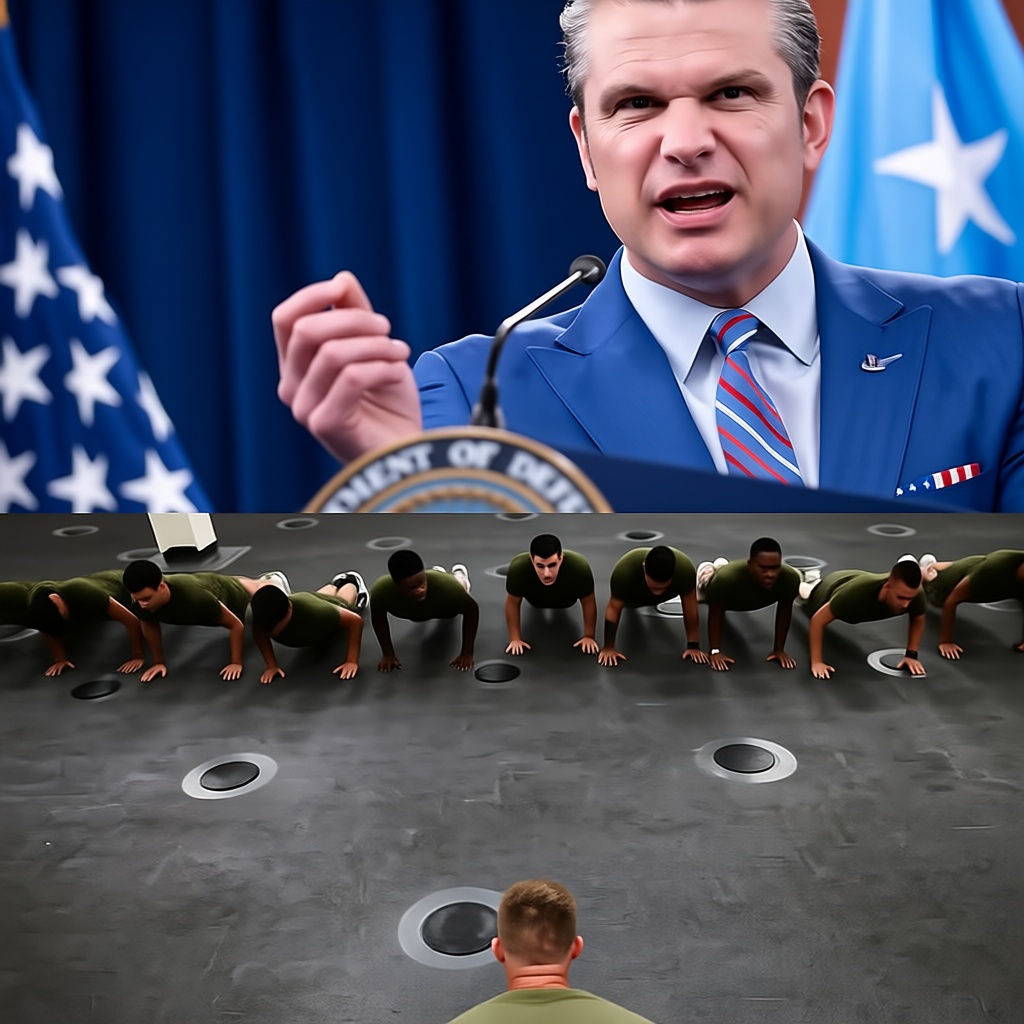
The Pentagon has announced a new policy that could shake up military medical protocols: starting this Wednesday, troops aged 30 and older will undergo annual testosterone screening as part of their standard health exams. According to a video posted by Pentagon official Pete Hegseth on X (formerly Twitter), the goal is to keep service members on the “leading edge of lethality.” The plan reportedly includes offering hormone replacement therapy to those found with low testosterone levels.
The announcement has immediately raised eyebrows and sparked intense debate over the science, ethics, and potential implications of such widespread hormone screening. Critics argue that the initiative is based on questionable medical grounds and could lead to overdiagnosis and unnecessary treatment, raising concerns about both the integrity of military medicine and the messaging around hormone therapies.
Peter Snyder, a prominent researcher who led major NIH-funded testosterone trials in older men, pointed out the flaws in this approach. Snyder states that genuine testosterone deficiency in healthy men over 70 is exceedingly rare, affecting roughly 2% of that population. This rarity underscores why blanket screening is not recommended by most medical experts. “A low reading alone, in the absence of symptoms and confirmed with multiple tests, is never enough to diagnose a deficiency,” Snyder explains.
He emphasizes that diagnosing true testosterone deficiency requires a combination of clinical symptoms alongside three consecutive early-morning blood draws showing low levels. Testing hundreds of thousands of men once a year, at irregular times, risks creating the illusion of an epidemic—something Snyder warns could be the result of normal blood variation being misinterpreted as deficiency.
Adding complexity to the controversy, medical guidelines from reputable bodies like the American Urological Association highlight that diagnosis cannot depend on a single blood test. They warn that such tests should be corroborated with symptoms and multiple blood samples to avoid misdiagnosis.
Furthermore, critics have pointed out the political and ethical implications of the policy. The same administration that has been vocally critical of hormone therapy for transgender service members—labeling it as “chemical and surgical mutilation”—is now endorsing widespread testosterone screening for a different demographic. Many see this as a doublespeak: when a trans soldier requests hormone therapy, it faces stiff opposition; yet, when treating healthy, aging soldiers for a potential “lethality” boost, the military appears more accepting.
The decision also raises logistical questions. The Pentagon did not provide specific research backing this new policy when asked. Nor did they clarify whether female service members, who make up over 231,000 active duty personnel, will be subjected to similar screening, especially women approaching perimenopause. Requests for clarification from Military Times were met with silence, with the Pentagon simply referencing Hegseth’s video.
Alarming as it may sound, this policy echoes previous issues within military ranks. In 2022, a Navy SEAL recruit died during training; testosterone was among his possessions, and subsequent investigations revealed broader drug use and performance-enhancing substance misuse in the program. That tragedy prompted the Navy to start screening for testosterone-related substances—a move now seemingly expanded on a far larger scale.
Many critics warn that militarizing hormone therapy risks turning it into a tool of performance enhancement rather than genuine medical treatment. As the policy unfolds, questions remain about its scientific basis, ethical justification, and potential impact on service members’ health and rights.