
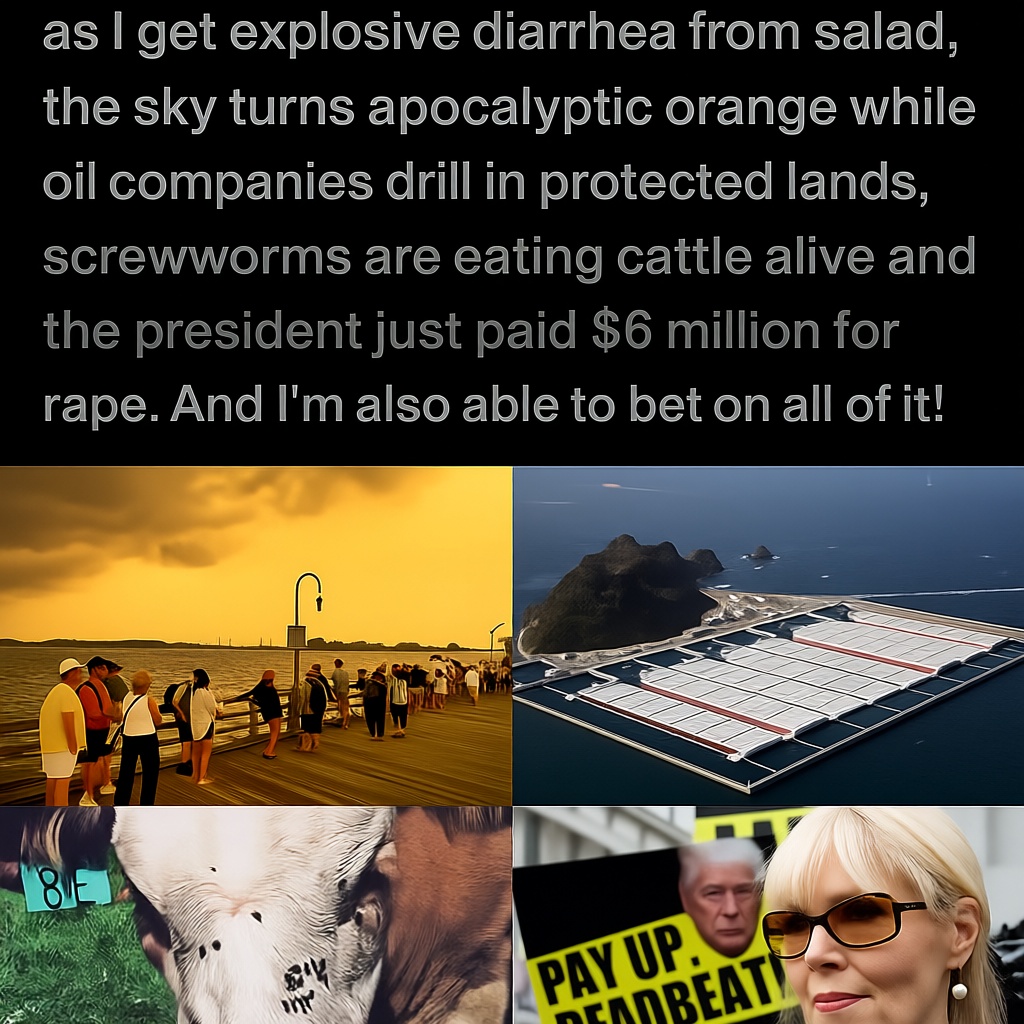
The surreal sight of an orange-tinged sky — not from a breathtaking sunset but from dense wildfire smoke — has become a stark reminder of the escalating environmental crises that are sweeping across the globe. Yet, amidst this apocalyptic backdrop, many are capturing it as if it’s a beautiful spectacle, unaware or dismissive of the dangerous reality behind the vibrant hue.
Meanwhile, health is taking a hit in the most mundane ways. A simple attempt to eat healthy by grabbing a salad turns into hours trapped in the bathroom — a consequence of inspection delays leaving contaminated produce on store shelves. These inspection agencies, once well-staffed and vigilant, are now operating on skeleton crews, unable to effectively prevent contaminated food from reaching consumers. It’s a small example of how cuts to vital public safety programs have tangible, everyday impacts.
Beyond our borders and backyard farms, the story grows darker. Oil companies are drilling into land officially protected for decades — not “someday” protected lands, but legally designated wilderness that was supposed to be off-limits. This blatant sacrifice of environmental integrity comes amid a broader trend of quietly dismantling regulations that once safeguarded ecosystems, all driven by profit motives. These actions threaten to irreversibly damage natural landscapes and the communities that depend on them.
On rural ranches, a new threat is emerging: screwworm infestations, a problem thought eradicated generations ago. Once contained at borders with strict oversight, today’s outbreak is rearing its ugly head due to staffing shortages and reduced budgets for agencies tasked with border and disease control. Ranchers are witnessing their livestock being devoured alive in real-time—a painful preview of how neglect can translate into economic and emotional devastation. Expect higher prices and fewer options at grocery stores when the impact filters through the supply chain.
And then there’s the grim political reality: a prominent leader, recently found liable for sexual assault and perjury by a jury, has paid a hefty six million dollars in damages. This high-profile case serves as a sobering reminder that justice can sometimes be costly, yet it also highlights the pervasive influence of power and money at the expense of truth and accountability.
The most unsettling aspect? These crises are interconnected and driven by a common pattern: deliberate underfunding and deregulation of agencies meant to protect the public. Corporations profit while the environment suffers, public health deteriorates, and systemic failures grow more obvious. As smoke chokes cities, as cattle fall victim to ancient pests, and as political scandals unfold, it’s clear that the wreckage is no accident — it’s a calculated outcome.
What we’re witnessing isn’t a string of isolated incidents but a pattern of systemic neglect, where those in power cut essential services, weaken guardrails, and allow profits to be made from destruction. And while the headlines might seem disconnected, they’re part of a larger, disturbing trend: a race to the bottom where public well-being is sacrificed for short-term gains. The question is not whether the system is broken — it is — but who will stand up to fix it before the damage becomes irreversible.