
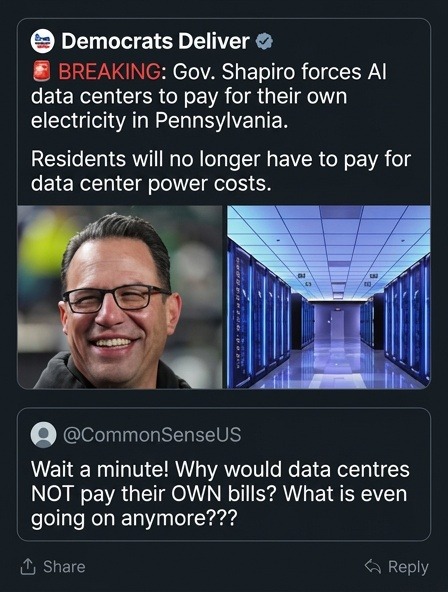
In a groundbreaking move that could redefine the future of artificial intelligence infrastructure, Pennsylvania Governor Josh Shapiro has announced a new policy mandating that AI data centers within the state produce their own electricity. This initiative aims to foster energy independence for tech giants, promising to reshape how data infrastructure operates across the region.
The policy, unveiled earlier this week, requires all new and existing AI data centers to develop on-site power generation capabilities, effectively ending their reliance on external electricity grids. According to officials, the goal is to promote more sustainable and self-sufficient data operations, reduce overall energy costs, and encourage innovation in clean energy technologies.
“Our residents deserve a future where technology and sustainability go hand in hand,” said Governor Shapiro in a press release. “This policy not only supports our environmental commitments but also empowers businesses to become more resilient and independent.”
Sources close to the decision indicate that the move was driven by a combination of environmental concerns and economic strategy. With AI data centers being some of the highest energy consumers, officials believe that enabling on-site power generation—such as solar panels, small-scale wind turbines, or renewable fuel cells—will mitigate environmental impact and enhance data security by reducing reliance on potentially vulnerable external grids.
The policy has already garnered both praise and criticism. Tech industry leaders have lauded the move as a bold step toward energy innovation, with some promising investments in renewable energy projects. However, critics argue that the new regulations could increase startup costs for AI companies, potentially slowing down expansion and innovation due to the high upfront expenses involved in building on-site power facilities.
Local residents, meanwhile, express mixed feelings. Many are optimistic about the environmental benefits and the potential for lower energy prices. Others are concerned about the financial implications for new data center projects, fearing that increased costs could impact local job creation and data industry growth.
This policy reflects a broader trend in states across the U.S. to promote renewable energy solutions within high-demand sectors. Pennsylvania’s move could serve as a template for other regions grappling with balancing technological advancement with sustainability commitments.
As the policy rolls out, stakeholders from government, industry, and environmental groups will closely monitor its impact on the state’s economy and ecological footprint. This ambitious step by Governor Shapiro underscores a commitment to a sustainable, self-reliant future for Pennsylvania’s digital infrastructure.
Where to Learn More
- Pennsylvania Governor Shapiro’s Ambitious Energy Policy for Data Centers – PennLive
- How Pennsylvania is Leading the Charge in Self-Sufficient AI Data Centers – TechCrunch
- Environmental Impacts of Pennsylvania’s New AI Data Center Regulations – Environmental News
- Pennsylvania Promotes Renewable Energy in Tech Infrastructure – Pennsylvania State Government