
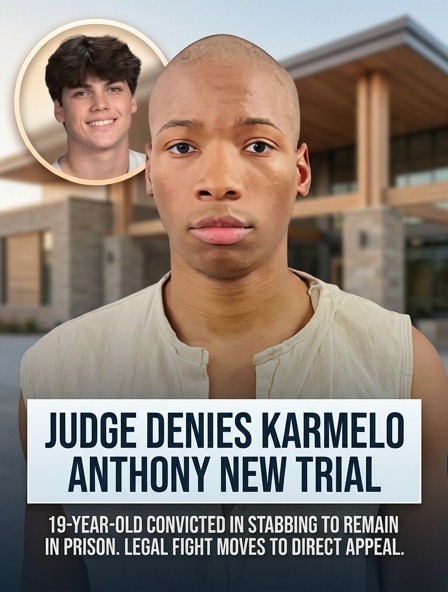
In a significant legal development, Karmelo Anthony, the 19-year-old convicted of murder in Texas, has been denied a new trial, cementing his 35-year prison sentence. The decision came after a rigorous two-day hearing where issues surrounding courtroom restrictions, hearing procedures, and an alleged unwritten agreement between his previous lawyers and prosecutors were scrutinized.
The courtroom proceedings revealed a tense and complex legal battle. Anthony was convicted in June for the stabbing and killing of 17-year-old Austin Metcalf during a confrontation at a Frisco track meet. The case has garnered widespread attention, especially as Anthony, now only 19, has maintained his innocence and challenged his conviction through various legal avenues.
The recent hearing, which extended over two days, was marked by controversy. Anthony was not present for the hearings, and the court questioned the restrictions placed on courtroom participation, arguing that they might have infringed on his rights. Additionally, the hearing examined whether there was any validity to claims that an unwritten agreement existed between Anthony’s former defense attorneys and prosecutors—an assertion that could have impacted the fairness of the trial.
Despite the heated debate and the testimony presented, a Texas judge ultimately rejected Anthony’s challenge, ruling that there was insufficient grounds to grant a new trial. The judge’s decision affirms the original verdict and confirms that Anthony must serve his 35-year sentence. The legal fight now proceeds along the route of a direct appeal, where broader questions about trial procedures and legal ethics may be reexamined.
This case highlights ongoing concerns about courtroom transparency and the rights of defendants, especially in high-profile cases involving young individuals. Critics argue that the complexities of Anthony’s case and the procedural issues raised during the hearing warrant a thorough review, but for now, the conviction remains intact.
Supporters of the victim and the prosecution have expressed satisfaction with the judge’s ruling, emphasizing the importance of accountability in justice. Meanwhile, Anthony’s legal team vows to continue fighting through the appellate system, asserting that substantive errors might have tainted his original trial.
As Anthony prepares for the next phase of his legal journey, questions remain over the fairness of courtroom procedures and the influence of legal agreements unseen to the public. The case remains a focal point for discussions about juvenile justice, legal ethics, and the role of courtroom transparency in ensuring justice for all parties involved.
Where to Learn More
- FOX News Coverage of Karmelo Anthony’s Legal Battle – Fox News
- Texas Court Denies New Trial for Karmelo Anthony – Texas Tribune
- Legal Experts Discuss High-Profile Youth Murder Cases – NBC News