
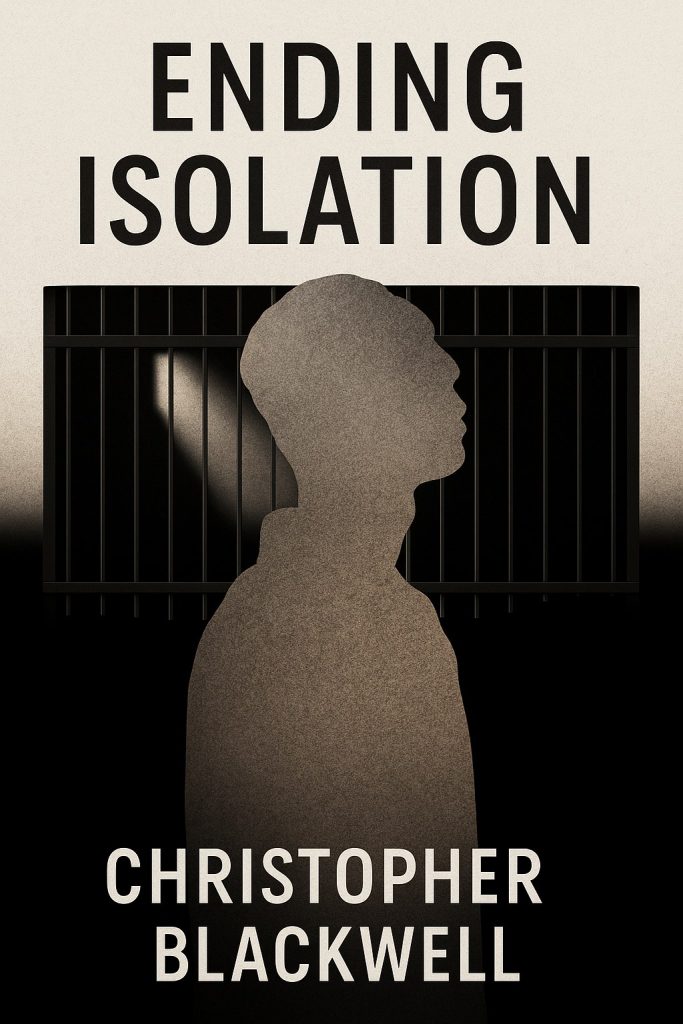
In a bold and timely exploration of the penal system, Christopher Blackwell’s new book, Ending Isolation, is taking the literary world by storm. The gripping narrative unveils the harsh realities of solitary confinement—a practice that has drawn increasing criticism for its devastating effects on the mental and emotional health of incarcerated individuals across the United States.
Solitary confinement, often referred to as “the hole,” has long been a controversial practice within prisons. According to various human rights organizations, the conditions under which inmates are held in isolation can lead to severe psychological distress, exacerbating existing mental health issues or even creating new ones. Blackwell’s book dives deep into these issues, intertwining personal anecdotes with extensive research to illuminate the profound suffering caused by this punitive measure.
With over 80,000 individuals confined to isolation at any given time in the U.S., Blackwell emphasizes that the extreme isolation can lead to long-lasting trauma. “These individuals are not only abandoned by society but are reduced to mere shadows of their former selves,” he stated during a recent interview. “Ending Isolation is not just a book about prison reform; it’s a call to humanity.” This sentiment resonates powerfully as the book deliberately seeks to humanize those society often overlooks or deems unworthy of compassion.
Drawing from his own experiences in the criminal justice system, Blackwell incorporates interviews with former inmates and correctional officers, offering a multifaceted view of the implications of solitary confinement. The testimonials reveal stories of despair, resilience, and, ultimately, a wish for reform. One ex-prisoner recounted, “You lose your grip on reality when you’re left alone in a cell for 23 hours a day. The silence is deafening.” These poignant reflections underscore a critical observation: isolation doesn’t just punish; it dehumanizes.
Moreover, Ending Isolation delves into the broader implications of solitary confinement, highlighting its disproportionate impact on marginalized communities. Blackwell presents a compelling argument that addressing this systemic issue is essential for achieving social justice. As movements advocating for prison reform gain momentum, his book serves as a vital resource for activists, policymakers, and anyone interested in reforming the justice system.
Available in bookstores and online, Ending Isolation has already garnered significant attention on social media platforms, with readers sharing powerful quotes and personal reflections about the importance of reforming solitary confinement practices. Blackwell encourages readers to engage in conversations about these topics. “Change begins with awareness. My hope is that this book sparks dialogue and, ultimately, action,” he explains.
With compelling arguments, heart-wrenching narratives, and a strong call to action, Christopher Blackwell’s Ending Isolation is not just a reading experience; it’s a movement for change. As the conversation surrounding prison reform continues to evolve, this book stands as a crucial exploration of a system that demands urgent attention and transformation.
Where to Learn More
- Solitary Confinement – ACLU – American Civil Liberties Union
- Isolated and Afraid: The Impact of Solitary Confinement – Human Rights Watch – Human Rights Watch
- The Effects of Solitary Confinement on Mental Health – NAMI – National Alliance on Mental Illness
- The Impact of Solitary Confinement – Prison Policy Initiative – Prison Policy Initiative
- Solitary Confinement: A Human Rights Crisis – Amnesty International – Amnesty International