In a provocative escalation of tensions in the Middle East, former President Donald Trump has issued a stark warning, asserting that the United States is prepared to launch a full ground invasion against Iran if necessary, amid Iran’s decision to close the strategic Strait of Hormuz. His comments have sent shockwaves through international diplomatic circles and have reignited fears of a major regional conflict.
The crisis erupted after Iran announced its decision to close the Strait of Hormuz — a vital waterway through which approximately 20% of the world’s oil passes — citing increased hostility and recent Israeli strikes on Lebanon as justification. This move threatens to choke global oil supplies, creating a potential economic and energy crisis worldwide.
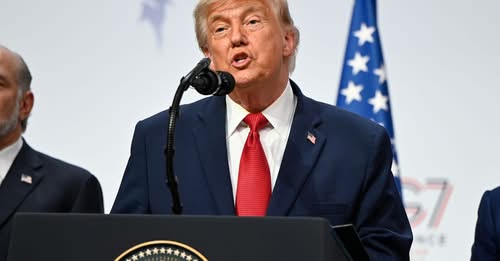
Trump’s remarks, made during a social media post that quickly went viral, read: “You won’t have a country if you mess with us or threaten the stability of the Strait of Hormuz. If Iran closes the strait, we will respond with overwhelming force, including a full ground invasion if necessary.” While many analysts interpret this as a rhetorical warning, critics fear it signals a dangerous escalation in a region already simmering with tension.
Adding fuel to the fire, an expert specializing in Middle Eastern geopolitics pointed out that Israel’s continued military strikes on Lebanon — targeting Hezbollah and other military assets — have pushed Iran to a “breaking point.” “Such actions threaten the fragile ceasefire in the region,” the analyst explained, warning that Iran’s threat to close the Strait could be an “existential” response, potentially destabilizing the entire Middle East and beyond.
Diplomats worldwide are scrambling to find a way to de-escalate the situation, but the prospects appear bleak as tensions escalate on multiple fronts. The United States, which has maintained a robust military presence in the Gulf, has vowed to protect international shipping lanes and uphold freedom of navigation.
Meanwhile, Iran has rejected efforts at diplomacy, insisting its actions are a response to hostile policies and economic sanctions imposed by the U.S. and its allies. The nation’s leadership has warned that any attempt at military intervention would be met with fierce resistance, raising fears of a broad regional conflict if diplomatic solutions are not found swiftly.
The international community faces a critical juncture: do they prioritize diplomacy to de-escalate or prepare for the possibility of open warfare? Experts warn that Trump’s provocative stance could either serve as a warning to Iran or, conversely, push Iran to act more aggressively — heightening the risk of a global crisis.