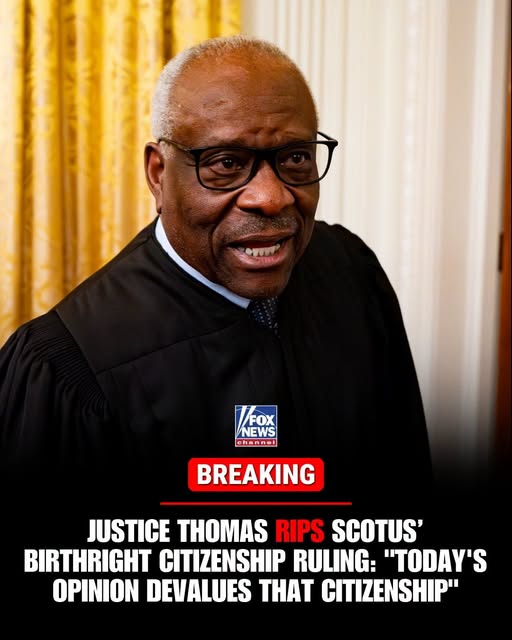
In a powerful and sharply worded dissent, Justice Clarence Thomas voiced his opposition to the recent Supreme Court majority decision that upheld birthright citizenship for children of foreign tourists and illegal aliens. The ruling, which affirms the constitutional right to citizenship for anyone born on U.S. soil regardless of parental immigration status, has sparked widespread debate and intense reactions across the political spectrum.
Justice Thomas’s dissent, circulated publicly after the Court’s 5-4 decision, criticizes the majority for allegedly “re purposing” the 14th Amendment’s Citizenship Clause. He argued that the Court’s interpretation extends far beyond the original intent of the Reconstruction-era legislators who drafted the amendment. “The 14th Amendment was not designed to grant automatic citizenship to all children born in the United States, especially those born to foreign birth tourists and illegal aliens,” Thomas stated.
The Justice further expressed concern that the Court’s decision diminishes the meaning and dignity of American citizenship. “Today, the Court does so again by recognizing a constitutional right to citizenship for the children of all foreign birth tourists and illegal aliens,” he wrote. While the majority views this ruling as a reaffirmation of existing rights, Thomas warns it could set a dangerous precedent, fundamentally altering the understanding of citizenship in the United States.
Thomas emphasized that he remains skeptical whether this interpretation will endure in the long term, citing the historical context and original legal understanding of the 14th Amendment. “The Citizenship Clause added greatly to the dignity and glory of American citizenship. Today’s opinion devalues that citizenship,” he concluded, reaffirming his position through a straightforward “I respectfully dissent.”
The ruling has ignited a lively social media debate, with critics praising the decision as a necessary step in ensuring equal rights for all individuals born in the U.S., regardless of their parents’ immigration status. Meanwhile, opponents argue that such policies incentivize illegal immigration and undermine national sovereignty.
The legal controversy surrounding birthright citizenship remains a contentious issue in American politics. Critics like Justice Thomas suggest it warrants reexamination, pointing to the original intent of the 14th Amendment, while supporters see it as a vital protection rooted in American identity and equality. As the debate intensifies, the implications of this ruling may influence policy and judicial interpretation for years to come.
Where to Learn More
- Supreme Court Ruling on Birthright Citizenship Sparks Debate – The New York Times
- Justice Clarence Thomas Slams Court’s Birthright Citizenship Decision – The Washington Post
- Analysis of Justice Thomas’s Dissent and Its Legal Implications – Scotusblog
- What the Supreme Court’s Birthright Citizenship Ruling Means for the Future – CNN