In the tumultuous decade that followed Donald Trump’s entry into the political arena, his impact on the American psyche has been profound and, in many ways, troubling. While critics have highlighted his policies and controversial actions, an emerging narrative on social media suggests that the most insidious aspect of his presidency isn’t just the decisions made in the halls of power, but the way he has reshaped the very way Americans think and perceive their country.
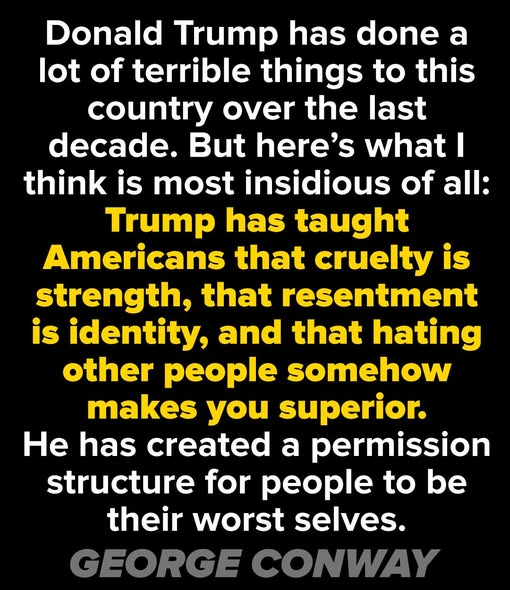
A viral social media post captures a stark sentiment that resonates with many: “Donald Trump has done a lot of terrible things to this country over the last decade. But here’s what I think is most insidious of all: Trump has taught Americans that…” The completion of this thought often points to a dangerous shift in collective attitudes — from trust in institutions to skepticism, from a sense of shared purpose to polarization, and from hope to defeatism.
One of the most damaging lessons, many argue, is the normalization of chaos and disinformation. During his tenure, Trump frequently dismissed mainstream media as “fake news,” undermining the public’s trust in reputable journalism. This tactic has, according to many experts, fostered a culture where misinformation and conspiracy theories thrive, making it increasingly difficult for citizens to discern truth from falsehood.
Moreover, Trump’s relentless rhetoric often targeted foundational democratic norms. Celebrating conflicts over peaceful transitions of power, dismissing the legitimacy of electoral processes, and questioning longstanding institutions have left a legacy that critics say could weaken trust in American democracy itself.
Another insidious trend, highlighted in many social media reflections, is how Trump’s leadership has contributed to a divided nation. Through targeted messages that appeal to emotion rather than reason, he has exacerbated ideological divides, encouraging Americans to see their fellow citizens not as neighbors but as adversaries. This polarization not only hampers dialogue but threatens the social fabric of the country.
Perhaps most concerning, say analysts, is the transmission of this worldview to future generations. As young Americans consume social media and adopt attitudes learned during his presidency, the potential for long-term cultural shifts grows. Schools, communities, and institutions now face the challenge of countering these perceptions and restoring faith in democratic principles.
Ultimately, while Donald Trump’s policies and actions are scrutinized, many believe the most lasting damage lies in the way he has influenced the collective mindset of the nation. The challenge ahead isn’t just policy reform but repairing the fractured perceptions and rebuilding trust in democracy.